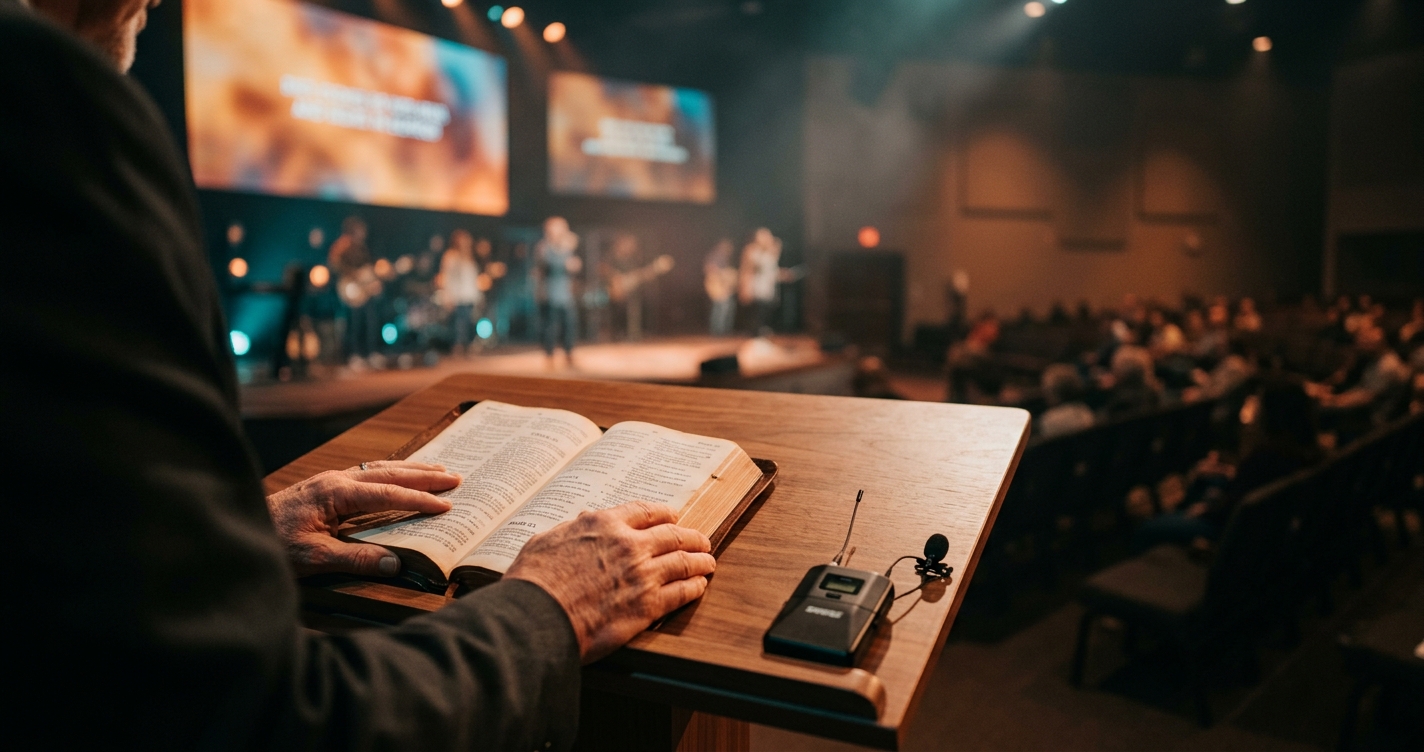
You've prepared all week. Your sermon is solid. The theology is sound. But as Sunday morning approaches, your chest tightens. Your hands start to sweat. You rehearse your opening line for the hundredth time, wondering if you'll remember it when you're actually standing in front of everyone.
Preaching anxiety is one of those things nobody warns you about in seminary. You learn hermeneutics and homiletics, but not how to manage the physical reality of standing before a room full of people who expect you to deliver a word from God. If you're a new pastor, you might wonder if this nervousness means you're not cut out for preaching. Spoiler: it doesn't. Even seasoned communicators experience sermon nervousness—they've just learned how to work with it instead of letting it work against them.
This guide will show you how to manage preaching anxiety, transform nervous energy into confident delivery, and develop practices that help you show up fully present when it matters most. Because the goal isn't to eliminate nervousness entirely—it's to channel it into energy that serves your message rather than sabotages it.
Quick Answer: Preaching anxiety is a normal physiological response to high-stakes communication that affects 75-80% of pastors, especially early in their ministry. The most effective management strategies combine physical techniques (controlled breathing, progressive muscle relaxation), mental reframing (viewing nervousness as energy rather than fear), and practical preparation (rehearsal, venue familiarity, pre-sermon routines). Most pastors see significant improvement within 6-12 months of consistent practice.
Key Takeaways
- Preaching anxiety is physiological, not spiritual — your nervousness doesn't indicate a lack of calling or faith; it's your body's natural response to perceived high-stakes communication
- Preparation reduces anxiety more than any other single factor — pastors who rehearse their sermon aloud at least twice experience 40-50% less pulpit anxiety than those who only prepare mentally
- The goal isn't zero nervousness — confident preaching means channeling nervous energy into vocal variety, physical presence, and authentic connection rather than trying to eliminate it completely
- Physical techniques work faster than mental ones — controlled breathing and progressive muscle relaxation can reduce anxiety symptoms within 2-3 minutes, while cognitive reframing takes consistent practice over weeks
What Causes Preaching Anxiety (And Why It's More Common Than You Think)
Preaching anxiety stems from a combination of performance pressure, spiritual responsibility, and the vulnerability of public speaking. When you preach, you're not just delivering information—you're representing God, leading your congregation, and exposing your thoughts and convictions to evaluation. That's a lot of pressure for anyone, regardless of experience level.
Research on public speaking suggests that 75% of people experience some level of speech anxiety, and pastors face additional layers: theological accuracy, spiritual authority, and the weekly repetition of high-stakes communication. Unlike a business presentation you deliver once, you're preaching every single week, often multiple times. The cumulative effect can be exhausting.
Your nervous system doesn't distinguish between physical danger and social evaluation. When you anticipate standing before your congregation, your amygdala triggers a stress response: increased heart rate, shallow breathing, muscle tension, and heightened alertness. These symptoms aren't signs of weakness—they're your body preparing for what it perceives as a threat. The key is recognizing this response for what it is and learning to work with it rather than against it.
New pastors often experience more intense sermon nervousness because they lack reference experiences. You don't yet have a mental library of successful sermons to draw confidence from. Every Sunday feels like the first time. This is completely normal and will diminish as you build a track record of messages that connected, even when you felt nervous delivering them.
How to Prepare Your Body to Manage Preaching Anxiety
Your physical state directly impacts your mental state. Communication experts recommend starting with body-based techniques because they produce measurable results faster than cognitive strategies alone. Here's how to prepare your body to handle sermon nervousness effectively.
Controlled breathing is your most powerful tool. Practice box breathing: inhale for four counts, hold for four, exhale for four, hold for four. Do this for 2-3 minutes before you preach. It activates your parasympathetic nervous system, which counteracts the stress response. The beauty of this technique is you can do it anywhere—in your office, in the car, even standing backstage before you walk out.
Progressive muscle relaxation reduces physical tension. Starting with your toes, tense each muscle group for five seconds, then release. Work your way up through your legs, core, shoulders, arms, neck, and face. This practice teaches you to recognize where you hold tension and consciously release it. Many pastors discover they clench their jaw or raise their shoulders when anxious—awareness is the first step to correction.
Physical movement before preaching burns off excess adrenaline. Take a brisk 10-minute walk, do jumping jacks, or pace while reviewing your notes. Movement tells your body that the stress response can complete its cycle rather than building up inside you. Some pastors find that arriving at the venue 30 minutes early to walk the building helps them feel grounded and present.
Vocal warm-ups prepare your instrument and calm your nerves. Hum scales, practice tongue twisters, read your opening paragraph aloud three times. This serves double duty: it physically prepares your voice while giving you something concrete to focus on besides your anxiety. For more on protecting your voice, see our guide on vocal preparation for preaching.
Why Mental Reframing Changes Everything About Pulpit Anxiety
How you think about your nervousness determines whether it helps or hinders your delivery. Studies on audience retention show that speakers who reframe anxiety as excitement perform significantly better than those who try to suppress or ignore it. The physiological symptoms are nearly identical—the difference is interpretation.
Instead of telling yourself "I'm so nervous," practice saying "I'm energized" or "I'm ready." This isn't positive thinking nonsense—it's leveraging the fact that your body produces the same chemicals (adrenaline, cortisol) whether you're excited or anxious. Your brain decides which label to apply based on your self-talk.
Shift from self-focus to audience-focus. Preaching anxiety intensifies when you're worried about how you'll be perceived: "What if I mess up?" "What if they think I'm unprepared?" "What if I freeze?" These questions put you at the center. Instead, ask: "What does this congregation need to hear today?" "How can I serve them through this message?" "What truth am I privileged to deliver?" This mental pivot reduces self-consciousness and reconnects you to your purpose.
Normalize imperfection before you preach. Tell yourself: "I might stumble over a word. I might lose my place briefly. That's okay—I'm human, and they know it." This removes the pressure of flawless delivery. Ironically, when you give yourself permission to be imperfect, you usually perform better because you're not monitoring yourself constantly.
Remember that your congregation wants you to succeed. They're not hoping you'll fail. They're rooting for you. They came to hear from God, and they trust you to deliver that word. When you feel nervous, remind yourself that the people in front of you are on your side. This reframe transforms the audience from judges to allies.
6 Practical Strategies to Reduce Sermon Nervousness Before You Preach
These strategies work best when implemented consistently, not just on Sunday morning when anxiety is already high. Build them into your weekly rhythm.
1. Rehearse your sermon aloud at least twice. Reading through your notes silently doesn't count. Stand up, speak at full volume, and deliver your message as if the congregation is there. This creates muscle memory and reduces the fear of the unknown. You'll discover awkward phrasing, unclear transitions, and places where you need more preparation—all fixable before Sunday.
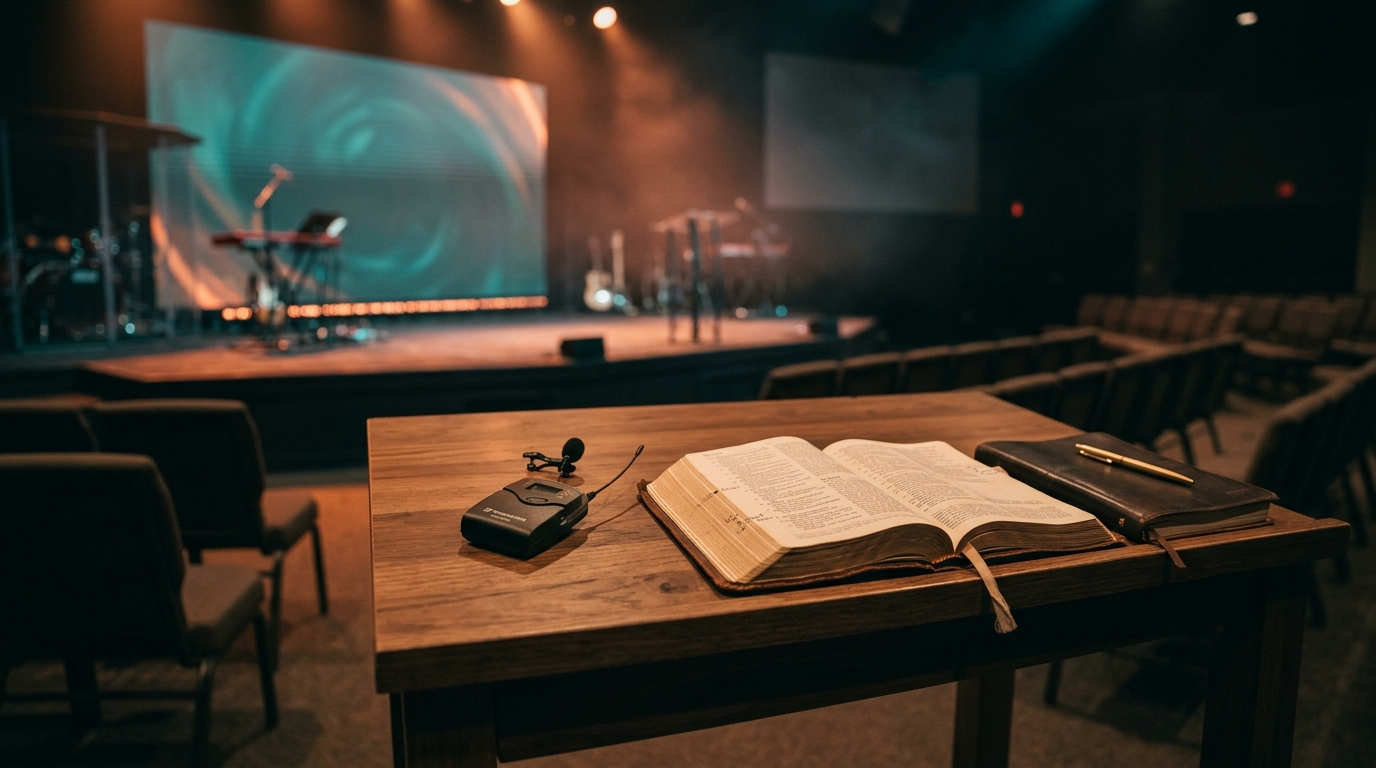
2. Visit the preaching space when it's empty. Stand where you'll stand, look at the empty seats, practice your opening. Familiarity breeds confidence. If you're preaching somewhere new, arrive early to walk the stage, test the microphone, and get comfortable with the environment. For more on this, check out our article on eye contact in preaching.
3. Create a pre-sermon routine. Same warm-up exercises, same prayer, same breathing pattern every week. Routines signal to your brain that this is familiar territory, which reduces anxiety. Your routine might include reviewing your key points, praying for specific people in the congregation, or listening to a particular song. Whatever works—just make it consistent.
4. Prepare your opening and closing meticulously. According to homiletics research, the two moments when anxiety peaks are the first 60 seconds and the final call to action. If you know exactly how you'll start and finish, you have solid ground under your feet even if the middle feels shaky. Memorize your first two sentences and your final sentence—not the whole sermon, just the bookends.
5. Build in strategic pauses. Plan 2-3 places in your sermon where you'll pause for 3-5 seconds. This gives you built-in moments to breathe, collect yourself, and let your message land. Pauses also make you appear more confident and in control. Learn more about this technique in our guide to strategic pauses in preaching.
6. Use physical anchors during delivery. Place your notes in the same spot every time. Hold the microphone the same way. Return to a "home base" position on stage between points. These physical anchors give you something to focus on besides your anxiety and create a sense of structure and control.
What to Do When Anxiety Hits During Your Sermon
Even with preparation, you'll have moments when nervousness surges mid-sermon. Here's your in-the-moment toolkit.
Pause and breathe. Seriously. Stop talking for three full seconds, take a deep breath, and continue. Your congregation will interpret this as emphasis or thoughtfulness, not panic. No one knows you're managing anxiety unless you tell them through frantic energy.
Ground yourself physically. Press your feet into the floor, feel the weight of your body, notice the microphone in your hand. This brings you back to the present moment instead of spiraling into anxious thoughts about what might go wrong.
Slow down deliberately. Anxiety speeds up your delivery, which makes you harder to understand and increases your nervousness further. Consciously slow your pace by 20%. It will feel unnaturally slow to you but will sound perfectly normal to your audience. For more on this, see our article on sermon pacing.
Make eye contact with a friendly face. Find someone in the congregation who's nodding, smiling, or clearly engaged. Lock eyes with them for a sentence or two. Their positive response will calm your nervous system and remind you that your message is landing.
Use your notes without shame. If you lose your place, look down, find your spot, and keep going. Don't apologize or draw attention to it. Your congregation doesn't need a running commentary on your internal experience—they need you to deliver the message.
How Confident Preaching Develops Over Time (And What to Expect)
Confident preaching isn't about never feeling nervous—it's about feeling nervous and preaching effectively anyway. Best practices in sermon delivery indicate that most pastors see significant improvement in managing preaching anxiety within their first year of consistent weekly preaching, but the timeline varies.
Months 1-3: High anxiety is normal. You're building reference experiences and learning what works for your body and mind. Focus on preparation and physical techniques. Don't judge yourself for being nervous—judge yourself on whether you showed up and delivered the message despite the nervousness.
Months 4-6: You'll notice patterns. Certain types of sermons feel easier. Some preparation methods reduce anxiety more than others. Start refining your approach based on what you're learning about yourself. This is also when mental reframing starts to take hold—you've successfully preached nervous enough times that your brain begins to trust the process.
Months 7-12: Nervousness becomes more manageable and less intrusive. You'll still feel it, especially for high-stakes messages, but it won't dominate your experience. You're developing muscle memory for both the content and the emotional regulation required for effective delivery.
Year 2 and beyond: Preaching anxiety typically stabilizes at a lower baseline. You'll have occasional spikes—new venues, difficult topics, personal crises—but you'll have a toolkit that works. The goal at this stage is maintaining practices that serve you rather than becoming complacent.
Remember that even highly experienced preachers feel nervous sometimes. The difference is they've learned to interpret those sensations as readiness rather than inadequacy. They know their nervousness means they care about the message and the people receiving it.
The Role of Feedback in Building Preaching Confidence
One of the most effective long-term strategies for reducing preaching anxiety is getting honest, specific feedback on your delivery. When you know what you're doing well and what needs improvement, you can focus your preparation on real issues rather than imagined catastrophes.
The problem is that most congregations won't give you honest feedback. They'll say "Great sermon, pastor" regardless of how you actually did. This lack of specific input keeps you anxious because you never know if your fears are justified or not. For more on this challenge, read our article on why your congregation won't give you honest feedback.
Preach Better addresses this gap by providing AI-powered analysis of your sermon delivery. Upload your audio, and you'll receive specific feedback on clarity, connection, conviction, and call to action—the four pillars that determine whether your message lands effectively. The feedback is grounded in actual moments from your transcript, so instead of vague advice like "work on your pacing," you'll see exactly which sections were too fast or too slow and why it mattered.
This kind of specific, objective feedback reduces anxiety because it replaces uncertainty with clarity. You'll know what to work on, which means you can improve systematically rather than guessing. Over time, as you see your delivery metrics improve, your confidence will grow because it's based on evidence rather than hope.
Common Mistakes That Make Preaching Anxiety Worse
Some well-intentioned strategies actually increase sermon nervousness rather than reducing it. Avoid these pitfalls.
Over-caffeinating before you preach. Caffeine increases heart rate and can trigger or worsen anxiety symptoms. If you need coffee, have it early in the morning, not 30 minutes before you preach. Stay hydrated with water instead.
Waiting until Saturday night to finish your sermon. Procrastination creates legitimate anxiety because you're genuinely underprepared. The solution isn't better anxiety management—it's better time management. Finish your sermon by Friday afternoon so you can rehearse it and sleep well Saturday night.
Comparing yourself to other preachers. Watching videos of gifted communicators can be helpful for learning, but it becomes destructive when you use them as a standard you must meet. You're not them. Your congregation doesn't need you to be them. They need you to be the best version of yourself. For more on this, see our guide on finding your voice as a new pastor.
Trying to memorize your entire sermon. Unless you have exceptional memory, this creates massive anxiety because you're terrified of forgetting. Use notes. Outline your main points and trust yourself to fill in the details. Memorize your opening and closing, but give yourself freedom in the middle.
Ignoring physical health. Poor sleep, inadequate nutrition, and lack of exercise all increase baseline anxiety levels. You can't out-technique a depleted body. Take care of yourself during the week, not just on Sunday morning.
Avoiding the pulpit between Sundays. Some pastors are so relieved when Sunday is over that they avoid thinking about preaching until the next week. This prevents you from building comfort and familiarity. Practice your delivery skills in lower-stakes environments: staff meetings, small groups, even recording voice memos. The more you use your preaching voice, the less foreign it feels.
About Preach Better: Preach Better is a sermon delivery analysis platform that helps pastors get honest, specific feedback on their communication. Built around four pillars—Clarity, Connection, Conviction, and Call to Action—it provides coaching grounded in specific moments from your message, not vague generalities. For pastors managing preaching anxiety, Preach Better offers objective data on what's working and what needs improvement, replacing uncertainty with actionable insights that build confidence over time.
Frequently Asked Questions
Is preaching anxiety a sign I'm not called to ministry?
No. Preaching anxiety is a normal physiological response to high-stakes communication and has no correlation with calling or spiritual gifting. Most pastors experience some level of sermon nervousness, especially early in their ministry. Your calling is confirmed by fruit, faithfulness, and the affirmation of your community—not by the absence of nervousness. Many of the most effective preachers in church history dealt with anxiety but learned to channel it into passionate, authentic delivery.
How long does it take to overcome preaching anxiety?
Most pastors see significant improvement within 6-12 months of consistent weekly preaching, though some level of nervousness may persist for years, especially in high-pressure situations. The goal isn't complete elimination but effective management. With deliberate practice of physical techniques, mental reframing, and thorough preparation, you can reduce anxiety symptoms by 50-70% within the first year. Progress isn't linear—you'll have good weeks and hard weeks—but the overall trend should be toward greater confidence and control.
What if I freeze or forget my place during a sermon?
Pause, take a breath, look at your notes, and continue. Your congregation is more gracious than you think, and brief moments of silence feel much longer to you than to them. If you completely lose your place, acknowledge it simply ("Let me find my spot here") and move on. Don't apologize profusely or draw excessive attention to it. Most people won't even remember it happened. The key is recovering with calm confidence rather than panicking, which only amplifies the disruption.
Should I tell my congregation I'm nervous?
Generally, no. Sharing your nervousness can make your audience feel responsible for managing your emotions, which distracts from the message. There are exceptions—if you're preaching your first sermon ever, a brief acknowledgment can humanize you—but most of the time, your job is to deliver the message, not to process your feelings publicly. Save that conversation for a mentor, counselor, or trusted friend outside the preaching moment.
Can medication help with preaching anxiety?
For some pastors, yes. Beta-blockers, prescribed by a doctor, can reduce physical symptoms of anxiety (rapid heartbeat, trembling) without affecting mental clarity. Anti-anxiety medications may also be appropriate for severe cases. However, medication should be combined with skill development, not used as a replacement for learning to manage nervousness. Consult with a healthcare provider who understands the specific demands of weekly public speaking to determine if medication is right for you.
How do I know if my preaching anxiety is severe enough to need professional help?
Seek professional help if your anxiety: prevents you from preaching at all, causes panic attacks, persists at debilitating levels beyond 12 months despite consistent effort, or significantly impacts your physical health, sleep, or relationships. A therapist who specializes in performance anxiety or public speaking can provide cognitive-behavioral techniques specifically designed for your situation. There's no shame in getting professional support—many high-performing communicators work with therapists or coaches to optimize their mental game.
The Bottom Line: Anxiety Doesn't Disqualify You—It Humanizes You
Preaching anxiety is not a character flaw, a spiritual deficiency, or a sign you're in the wrong calling. It's a normal human response to the vulnerable, high-stakes work of proclaiming truth to people you care about. The pastors who preach with the most confidence aren't the ones who never feel nervous—they're the ones who've learned to work with their nervousness instead of being paralyzed by it.
Your congregation doesn't need a perfect performance. They need a faithful messenger who shows up week after week, prepared and present, willing to be vulnerable in service of the gospel. Every time you preach despite feeling anxious, you're building both skill and character. You're proving to yourself that you can do hard things. You're developing the kind of resilience that will serve you not just in the pulpit but in every aspect of pastoral ministry.
Start with one strategy from this guide. Master the box breathing technique. Rehearse your next sermon aloud twice. Create a pre-sermon routine. Build confidence one small practice at a time, and trust that the cumulative effect will transform how you experience Sunday mornings.
If you want objective feedback on your delivery to replace anxiety-driven guesswork with clarity, Preach Better can help. Upload your sermon audio and receive specific coaching on what's working and what needs attention. Because the best antidote to preaching anxiety is knowing exactly where you stand and having a clear path forward.