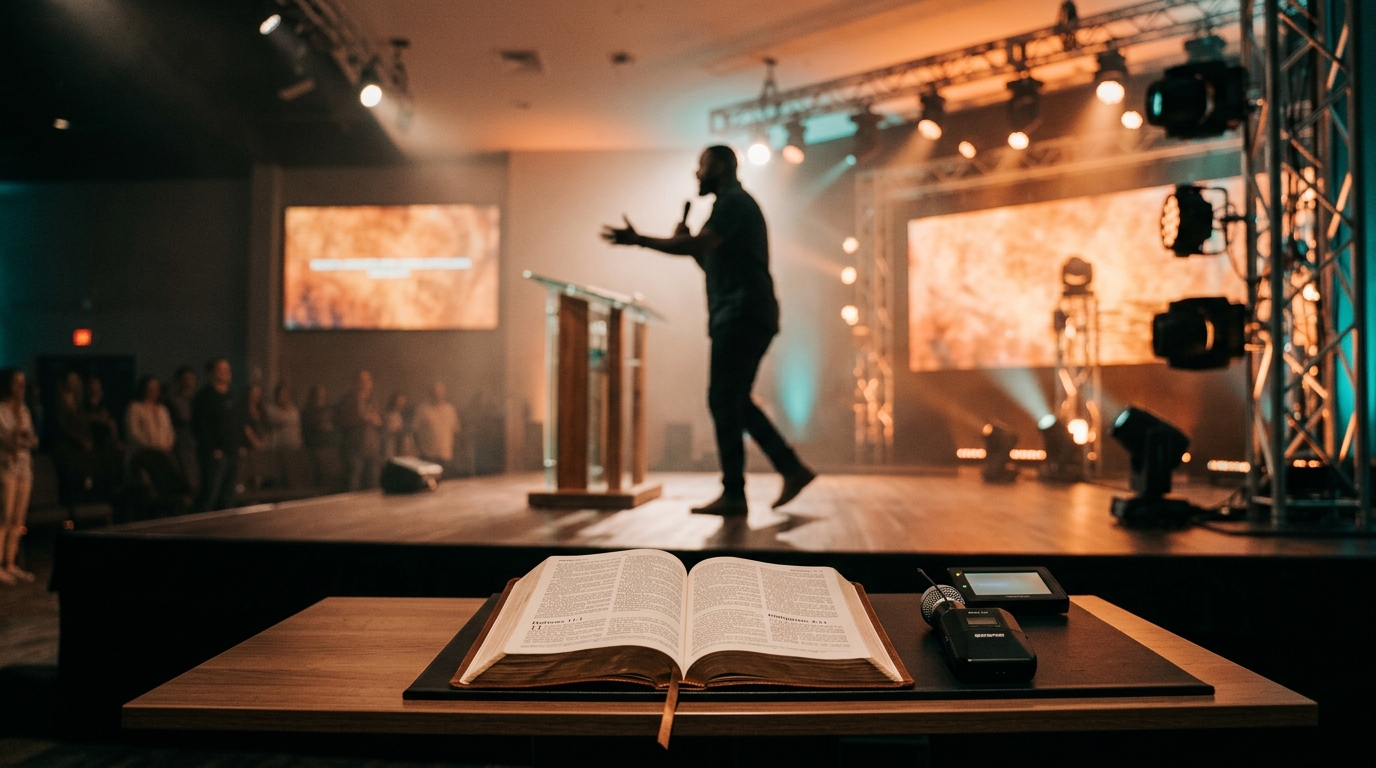

You've just delivered what you thought was your most important point. You emphasized it, raised your voice slightly, and moved on to the next thought. But here's what you didn't see: half your congregation was still processing the previous sentence when you started the next one. They missed it.
This happens in sermon after sermon, and it's not because your content isn't good. It's because you're not giving people time to absorb what you're saying. Strategic pauses in preaching are the difference between information delivery and genuine communication. When Preach Better analyzes sermon recordings, one of the most common opportunities we identify is the underuse of intentional silence—pastors who could double their impact simply by talking less.
The irony is that most pastors know pauses matter. We've all heard that advice. But knowing and doing are different things. When you're in front of people, silence feels awkward. Your internal clock tells you three seconds is an eternity. So you fill the space with words, and your congregation never gets the processing time they need.
This guide will show you exactly when to pause, how long to wait, and why strategic silence might be the most powerful tool in your communication arsenal. You'll learn the specific moments that demand a pause, the common mistakes that undermine your pacing, and practical techniques you can implement in your next sermon.
Quick Answer: Strategic pauses in preaching are intentional moments of silence (typically 2-5 seconds) placed after key statements, before major transitions, and during emotional moments to give your congregation time to process, reflect, and emotionally engage with your message. Research on public speaking suggests that speakers who pause strategically are perceived as 40% more credible and their content is retained 25% better than speakers who rush through material.
Key Takeaways
- Pauses after major points increase retention by up to 25% — your congregation needs 3-5 seconds to process significant statements before moving forward
- Strategic silence creates emotional space — the most powerful moments in preaching often happen in the seconds after you stop talking, not while you're speaking
- Proper sermon pacing requires more pauses than you think — most pastors pause 60% less frequently than optimal communication patterns suggest
- Pause placement matters more than pause frequency — random silence doesn't help, but pauses at transition points, after questions, and before applications transform delivery
What Makes Strategic Pauses Different from Just Stopping to Breathe?
Strategic pauses in preaching are intentional silences placed at specific moments for specific purposes, not just gaps where you happen to catch your breath. The difference is planning and placement.
When you pause strategically, you're making a deliberate choice: "This moment needs silence." You've identified a statement that deserves reflection, a transition that needs emphasis, or an emotional beat that requires space. You're using silence as a communication tool, the same way you use vocal emphasis or hand gestures.
Breathing pauses, by contrast, happen wherever you run out of air. They're physiological necessities that may or may not align with your content's natural rhythm. Sometimes they land in helpful places. Often they don't. A breathing pause might interrupt a sentence mid-thought, while a strategic pause comes after a complete idea.
Communication experts recommend thinking of strategic pauses as punctuation marks made audible. A comma pause (1-2 seconds) separates related thoughts. A period pause (2-3 seconds) marks the end of a complete idea. A paragraph pause (3-5 seconds) signals a major transition or follows a significant statement. Just as written punctuation guides readers through your content, strategic pauses guide listeners through your sermon.
The most effective preachers use both types. They breathe when they need to, but they also insert intentional silence at key moments regardless of whether they need air. This creates a sermon pacing that feels natural while maximizing comprehension and emotional impact.
Why Do Strategic Pauses in Preaching Actually Work?
Strategic pauses work because your congregation's brains need processing time, and silence provides it. When you speak continuously, you're essentially asking people to receive new information while still processing the previous information. That's cognitively difficult, and most listeners can't do both simultaneously.
Studies on audience retention show that listeners remember significantly more content when speakers pause after important points. The reason is simple: memory consolidation requires a brief moment of mental rehearsal. When you say something significant and then immediately move to the next point, you interrupt that rehearsal process. The new information overwrites the old before it can be stored.
But when you pause for 3-5 seconds after a key statement, you give people time to mentally repeat what you said, connect it to their own experience, and move it from short-term to long-term memory. That pause is when "God so loved the world" becomes "God so loved me" in someone's mind. That's when abstract truth becomes personal reality.
Strategic pauses also create anticipation and emphasis. According to homiletics research, listeners pay more attention to what comes immediately after a pause than to content delivered in continuous flow. Silence signals importance. It tells your congregation, "What comes next matters—lean in." This is why comedians pause before punchlines and why effective speakers pause before revealing key information.
Additionally, pauses provide emotional space. When you're discussing something heavy—grief, sin, suffering—continuous talking can feel overwhelming. A pause in sermon delivery allows people to feel what they're feeling without the pressure to immediately move on. It communicates that you understand the weight of what you're discussing and that you're not afraid of silence.
How Long Should a Strategic Pause Actually Be?
A strategic pause in preaching should typically last between 2-5 seconds, depending on the context and purpose. This feels much longer when you're the one standing in silence, but it's exactly the right length for your congregation.
For emphasis after a key statement, aim for 3-4 seconds. This is long enough for the statement to land and for people to begin processing it, but not so long that attention starts to drift. If you've just said something like "God doesn't love you because you're good—you're good because God loves you," count to three slowly in your head before continuing.
For transitions between major sections, use 4-5 seconds. This longer pause signals a shift and gives people time to mentally close one chapter before opening the next. If you're moving from your second point to your third point, or from teaching to application, the extra second makes that transition clear.
For rhetorical questions, pause 2-3 seconds. This is enough time for people to mentally engage with the question without feeling like you're waiting for an audible response. If you ask, "When was the last time you really talked to God?" wait three seconds. Let them actually think about it.
Best practices in sermon delivery indicate that shorter pauses (1-2 seconds) work for minor transitions and between sentences within the same thought. These are closer to extended commas—they provide rhythm without creating major breaks.
The biggest mistake pastors make is cutting pauses short. What feels like an eternity to you is barely noticeable to your listeners. Research on public speaking suggests that speakers consistently underestimate optimal pause length by 40-50%. If a pause feels slightly too long to you, it's probably just right for your audience.
What Are the Five Essential Moments That Demand a Strategic Pause?
Certain moments in every sermon require strategic pauses, regardless of your speaking style or content. These are the non-negotiables—the places where silence transforms good delivery into great delivery.
After your main points. Every time you complete a major point in your sermon, pause for 4-5 seconds before moving forward. This is the single most important pause placement. Your main points are the framework your congregation will remember, and they need time to land. If your point is "God's grace isn't earned, it's received," say it clearly, then stop. Count to four. Let it sink in. Then continue.
Before and after Scripture readings. Pause 3-4 seconds before you read Scripture to create anticipation and signal importance. Pause 4-5 seconds after you finish reading to let the Word sit in the room. This communicates reverence and gives people time to hear God's voice, not just your voice. The pause says, "This isn't just me talking—this is God speaking."
After rhetorical questions. When you ask your congregation a question, you're inviting them to think. Give them time to actually do it. A 2-3 second pause after "What would your life look like if you really believed that?" is the difference between a rhetorical device and genuine engagement. Without the pause, it's just a sentence that happens to end with a question mark.
Before your call to action. The transition from teaching to application is the most important moment in your sermon. Pause 4-5 seconds before you say, "So what does this mean for us?" or "Here's what this looks like in real life." This pause signals the shift and prepares people to move from hearing to doing. It's the hinge on which your entire message turns.
During emotional moments. When you're discussing something heavy or tender—suffering, loss, redemption, grace—strategic pauses create space for people to feel. If you're telling a story about someone's pain or God's faithfulness, pause at the emotional peaks. Let people sit with the weight or the beauty. Don't rush past the moments that matter most.
These five moments appear in every sermon. Master the pauses here, and you'll immediately improve your delivery without changing a single word of your content.
How Can You Train Yourself to Actually Use Strategic Pauses?
Knowing where to pause and actually pausing are two different skills. Most pastors struggle with the execution because silence feels uncomfortable and our instinct is to fill it. Here's how to train yourself to embrace strategic pauses in preaching.
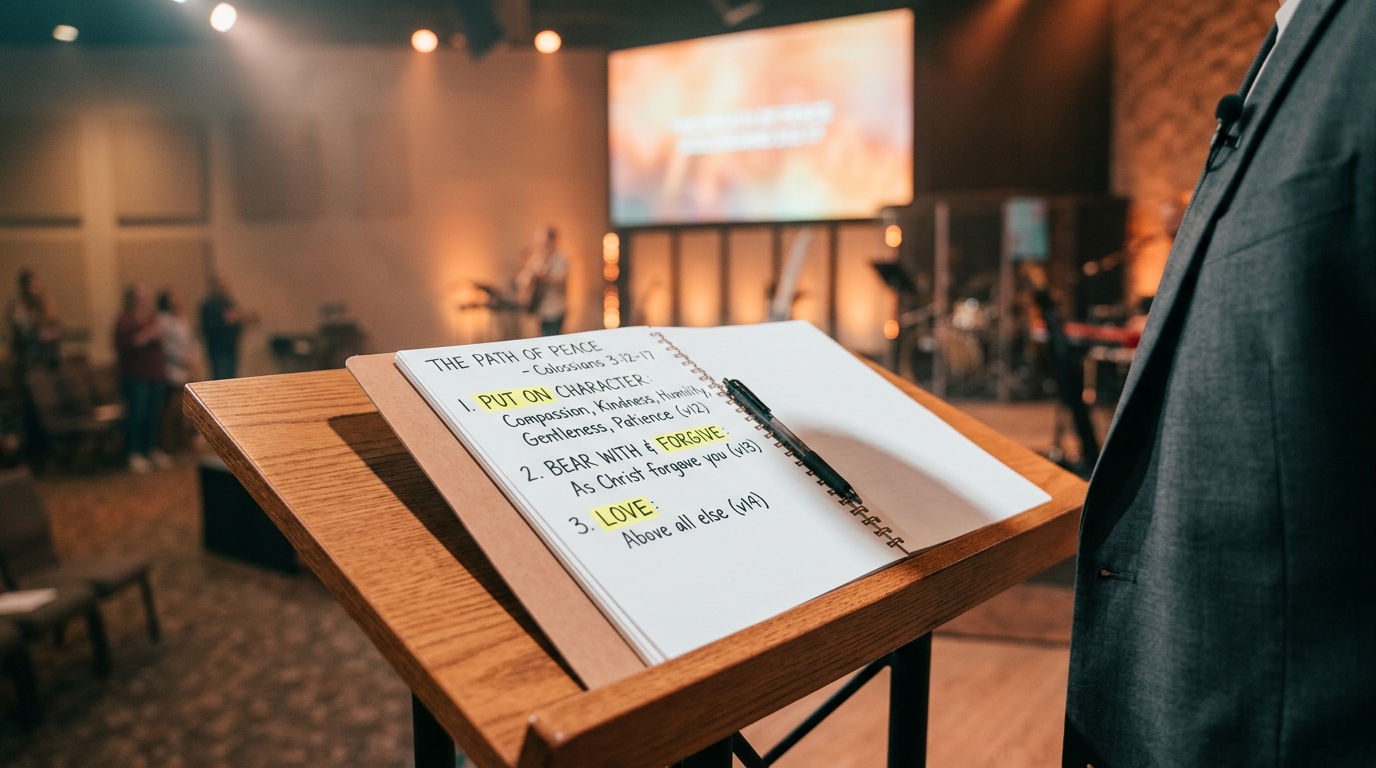
Start by marking your manuscript. If you preach from a manuscript or detailed notes, physically mark your strategic pauses. Use a symbol—double slash (//), asterisk (*), or highlighted space—at every place you've identified a needed pause. This visual cue reminds you in the moment to stop talking. Over time, these marked pauses become automatic, and you'll start creating them naturally even without notes.
Practice with a timer during sermon prep. When you're rehearsing your sermon, set a timer on your phone for 3 seconds. Every time you reach a marked pause, start the timer and wait until it beeps before continuing. This calibrates your internal clock. What feels like an eternity is actually just three seconds. After several practice sessions, you'll develop a feel for proper pause length without needing the timer.
Record yourself and count the pauses. Use your phone to record a practice run-through of your sermon. Then listen back and count how many strategic pauses you actually used versus how many you planned. Most pastors discover they skipped 60-70% of their intended pauses. This awareness alone improves execution. You can also use a platform like Preach Better to analyze your sermon pacing and get specific feedback on pause frequency and placement tied to exact moments in your transcript.
Start small with one pause type. Don't try to master all five essential pause moments at once. Pick one—say, pausing after main points—and focus exclusively on that for a month. Make it non-negotiable. Once that pause becomes automatic, add another type. This incremental approach builds the skill without overwhelming you.
Embrace the awkwardness. The first few times you use strategic pauses, they'll feel weird. You'll be convinced everyone is staring at you wondering why you stopped talking. Push through it. Your congregation isn't experiencing what you're experiencing. To them, the pause feels natural and purposeful. The awkwardness is in your head, not in the room.
Get feedback from trusted listeners. Ask 2-3 people in your congregation to specifically listen for your pauses and tell you afterward whether they noticed them and whether they felt helpful. This external perspective helps you calibrate. Often you'll discover that the pauses you thought were too long were actually just right, and the ones you thought were sufficient were barely noticeable.
What Are the Most Common Strategic Pause Mistakes Pastors Make?
Even when pastors understand the value of strategic pauses, execution mistakes undermine the impact. Here are the most frequent errors and how to fix them.
Filling pauses with filler words. The most common mistake is saying "um," "uh," "you know," or "right?" during what should be silence. This completely defeats the purpose. A pause filled with verbal filler isn't a pause—it's just more noise. The fix is awareness. Once you notice you're doing it, you can consciously stop. Many pastors find that eliminating filler words and mastering strategic pauses go hand-in-hand—as you get comfortable with silence, filler words naturally decrease.
Pausing in random places instead of strategic moments. Some pastors pause frequently but without intentionality. They stop mid-sentence because they lost their place or need to think. These random pauses don't help and can actually confuse listeners. Strategic pauses must be placed at natural breaks—after complete thoughts, before transitions, following questions. The placement matters as much as the pause itself.
Making pauses too short. Most pastors underestimate how long a pause needs to be. They stop for one second and think they've paused strategically. But one second isn't enough processing time. The fix is simple: double whatever feels natural to you. If your instinct says pause for two seconds, make it four. If four feels right, make it five. Your instinct is probably calibrated to your comfort, not your congregation's needs.
Using the same pause length for everything. Not all pauses should be the same duration. A pause after a minor transition needs less time than a pause after your main point. Varying your pause length based on context creates better sermon pacing and prevents monotony. Think of it like dynamics in music—sometimes you need a rest, sometimes you need a full measure of silence.
Breaking eye contact during pauses. When you pause, maintain eye contact with your congregation. Don't look down at your notes or away from people. The pause is a moment of connection, not disconnection. Looking at your audience during silence communicates confidence and intentionality. It says, "I'm pausing on purpose, and I'm here with you in this moment."
Rushing to fill the silence. The final mistake is starting to pause but then panicking and cutting it short. You stop talking, feel the awkwardness, and immediately start again before the pause has done its work. This is a trust issue—you don't trust that the silence is valuable. The fix is practice and feedback. The more you pause fully and hear from people that it helped, the more you'll trust the process.
How Do Strategic Pauses Work Differently in Different Sermon Styles?
Strategic pauses in preaching adapt to different delivery styles while maintaining the same core principles. The placement and purpose remain consistent, but the execution varies.
In expository preaching, where you're working verse-by-verse through Scripture, pauses naturally fall after each verse or thought unit. After reading a verse, pause 3-4 seconds before explaining it. After explaining it, pause 2-3 seconds before moving to the next verse. This creates a rhythm: read, pause, explain, pause, read. The pauses help people distinguish between God's Word and your commentary on God's Word.
In topical preaching, pauses work best at the transitions between your main points. Since topical sermons can feel like a collection of related ideas rather than a linear progression, strategic pauses help create structure. They signal, "We've finished discussing this aspect, and now we're moving to the next." Without these pauses, topical sermons can feel like a firehose of information.
In narrative or story-based preaching, pauses create dramatic tension and emotional space. Pause before revealing key information in a story. Pause after emotional peaks. Pause when a character makes a significant choice. These pauses work like they do in film—they control pacing and give the audience time to feel. A story told without pauses feels rushed and less impactful.
In conversational or teaching-style preaching, pauses feel more like natural speech patterns. You're pausing the way you would in a one-on-one conversation—after questions, before important statements, during transitions. The key is making sure these "natural" pauses are actually strategic. Just because your style is conversational doesn't mean you should skip the intentional silence after main points.
According to homiletics research, regardless of style, the five essential pause moments (after main points, around Scripture, after questions, before application, during emotional moments) remain non-negotiable. Your style determines the feel of the pauses, but not whether they happen.
What Should You Listen for When Evaluating Your Own Pause Usage?
When you review a recording of your sermon to assess your strategic pause usage, listen for these specific markers.
Count your pauses per minute. Effective sermon pacing typically includes 3-5 strategic pauses per minute of speaking. This doesn't mean constant silence, but it does mean regular breaks for processing. If you're speaking for 30 minutes and only pausing 20 times, you're likely rushing. If you're pausing 200 times, you might be over-doing it or your pauses are too short to count as strategic.
Measure pause duration. Use the recording's timestamp to measure how long your pauses actually last. Pause the playback when you stop talking, note the timestamp, then resume when you start again. Are your pauses 1 second or 4 seconds? Most pastors discover their pauses are 30-50% shorter than they thought. This measurement helps you calibrate.
Identify pause placement. Mark every pause in your recording and note what comes before and after it. Are you pausing after main points? Before Scripture? After rhetorical questions? Or are your pauses randomly distributed? Strategic placement is more important than frequency. Ten well-placed pauses beat thirty random ones.
Listen for filler-word intrusions. Pay attention to whether your pauses are actually silent or filled with "um," "uh," or other verbal tics. Clean pauses are more effective. If you're filling the silence, you're not really pausing. This is one of the key areas where sermon delivery coaching can help—having specific feedback tied to exact moments in your transcript makes it easier to identify and fix filler-word patterns.
Notice audience response indicators. If you have video of your sermon, watch your congregation during your pauses. Are people looking at you, engaged and thinking? Or are they looking around, checking phones, or appearing confused? Engaged faces during pauses indicate the silence is working. Distracted faces suggest your pauses might be too long or poorly placed.
Assess the overall rhythm. Does your sermon have a sense of pacing and flow, or does it feel like one continuous stream? Strategic pauses create rhythm—a pattern of speaking and silence that feels natural and keeps attention. If your recording feels monotonous or exhausting to listen to, you likely need more pauses to break up the content.
The goal isn't perfection. It's improvement. Each sermon you evaluate gives you data to adjust your next one. Over time, strategic pauses become automatic, and your natural delivery incorporates them without conscious effort.
About Preach Better: Preach Better is a sermon delivery analysis platform that helps pastors get honest, specific feedback on their communication. Built around four pillars—Clarity, Connection, Conviction, and Call to Action—it provides coaching grounded in specific moments from your message, not vague generalities. When analyzing sermon pacing, Preach Better identifies exactly where strategic pauses would strengthen your delivery and tracks your progress over time as you develop this essential skill.
Frequently Asked Questions
How long is too long for a strategic pause in preaching? A strategic pause becomes too long when it crosses 6-7 seconds in most contexts, as attention begins to drift and the silence shifts from purposeful to awkward. However, during highly emotional moments or after particularly profound statements, pauses up to 8-10 seconds can be effective if you maintain strong eye contact and confident body language throughout the silence.
Should I pause the same way in a small church versus a large church? Pause duration should remain consistent regardless of church size (2-5 seconds for most strategic pauses), but larger venues may benefit from slightly longer pauses because sound takes longer to dissipate in bigger spaces and audiences need more time to collectively process. In intimate settings under 50 people, you can sometimes use shorter pauses (2-3 seconds) because the conversational feel allows for quicker rhythm.
What if pausing makes me lose my train of thought? If strategic pauses cause you to lose your place, you likely need better sermon notes or more thorough preparation. Mark your pauses in your manuscript with a visual symbol, and ensure the content immediately following each pause is clearly highlighted or bolded. With practice, pauses become mental reset points that actually help you remember what comes next rather than causing confusion.
How do I know if I'm pausing too much in my sermons? You're pausing too much if your sermon feels choppy rather than rhythmic, if pauses interrupt sentences mid-thought instead of following complete ideas, or if your congregation appears confused by the constant stops. Aim for 3-5 strategic pauses per minute—more than that risks over-fragmenting your content unless you're in a highly narrative or dramatic sermon style.
Can strategic pauses help with congregation engagement problems? Yes, strategic pauses significantly improve engagement by giving people processing time, creating anticipation, and providing emotional space to connect with your content. Many congregation engagement mistakes stem from pacing issues—speaking too quickly or continuously without breaks makes it difficult for listeners to stay mentally present, while well-placed pauses invite active participation in the message.
Should I pause after every sentence when I preach? No, pausing after every sentence creates unnatural, choppy delivery and prevents the development of thought flow. Strategic pauses should come after complete thoughts (which may span multiple sentences), at major transitions, around Scripture readings, after rhetorical questions, and during emotional moments—not after every individual sentence. Think of pauses as paragraph breaks, not periods.
Bottom Line: Silence Is Part of Your Sermon
Strategic pauses in preaching aren't optional extras for advanced communicators—they're fundamental to effective delivery at every level. The difference between a sermon that informs and one that transforms often comes down to the spaces between your words, not the words themselves.
Your congregation needs time to process, reflect, and respond. When you pause strategically after main points, around Scripture, following questions, before application, and during emotional moments, you're not wasting time—you're maximizing impact. You're treating your listeners like thinking, feeling people who need space to engage with truth, not just hear it.
The pastors who master strategic pauses discover something surprising: they can say less and communicate more. They can preach shorter sermons that land harder. They can create moments their congregation remembers long after the service ends.
Start with one pause type this week. Mark it in your notes. Practice it with a timer. Then use it in your sermon. Notice what happens when you give your words room to breathe. Notice what happens when you trust the silence.
Your next sermon is an opportunity to communicate with greater clarity and impact. Strategic pauses are one of the simplest, most powerful tools available to you. The question isn't whether to use them. It's whether you're willing to get comfortable with the silence that makes your message unforgettable.
If you want specific feedback on your sermon pacing tied to exact moments in your transcript, Preach Better can help you identify where strategic pauses would strengthen your delivery and track your improvement over time. Because every message matters—and every pause does too.