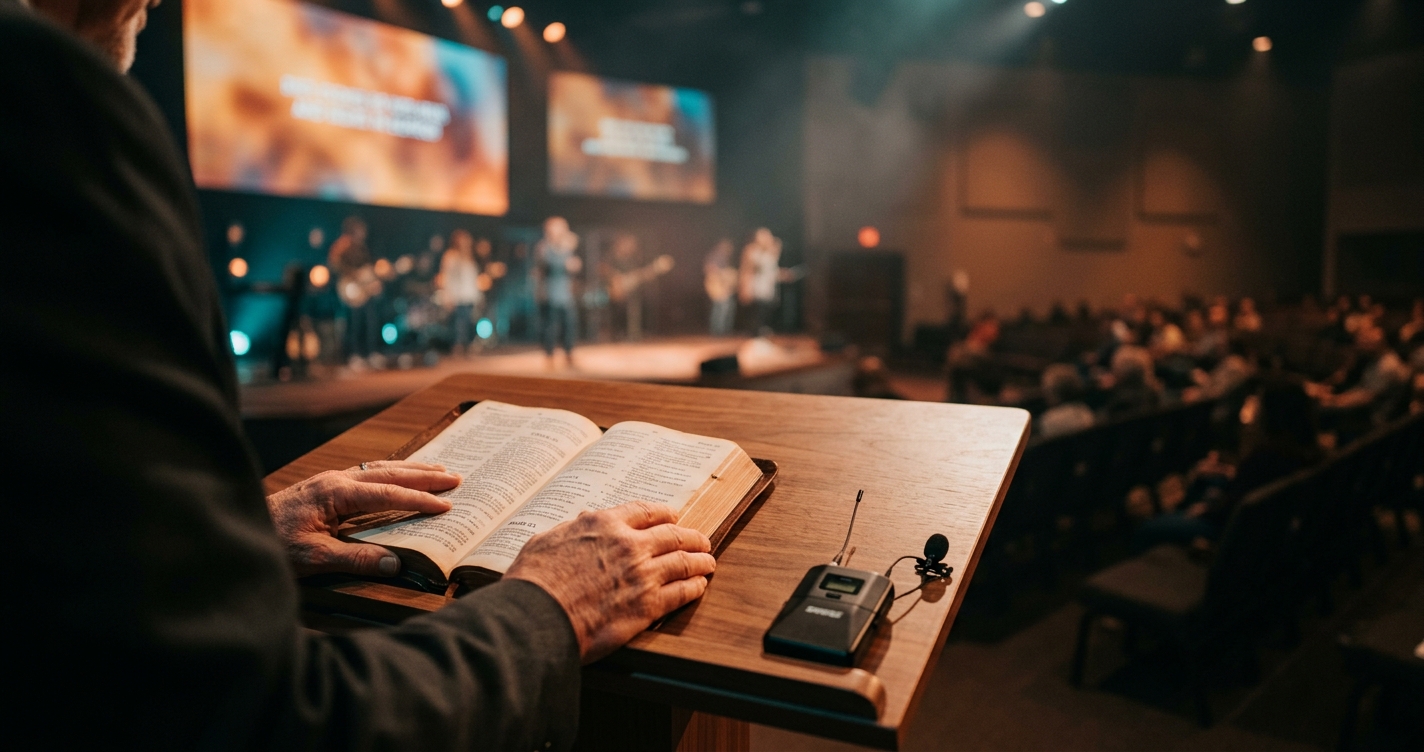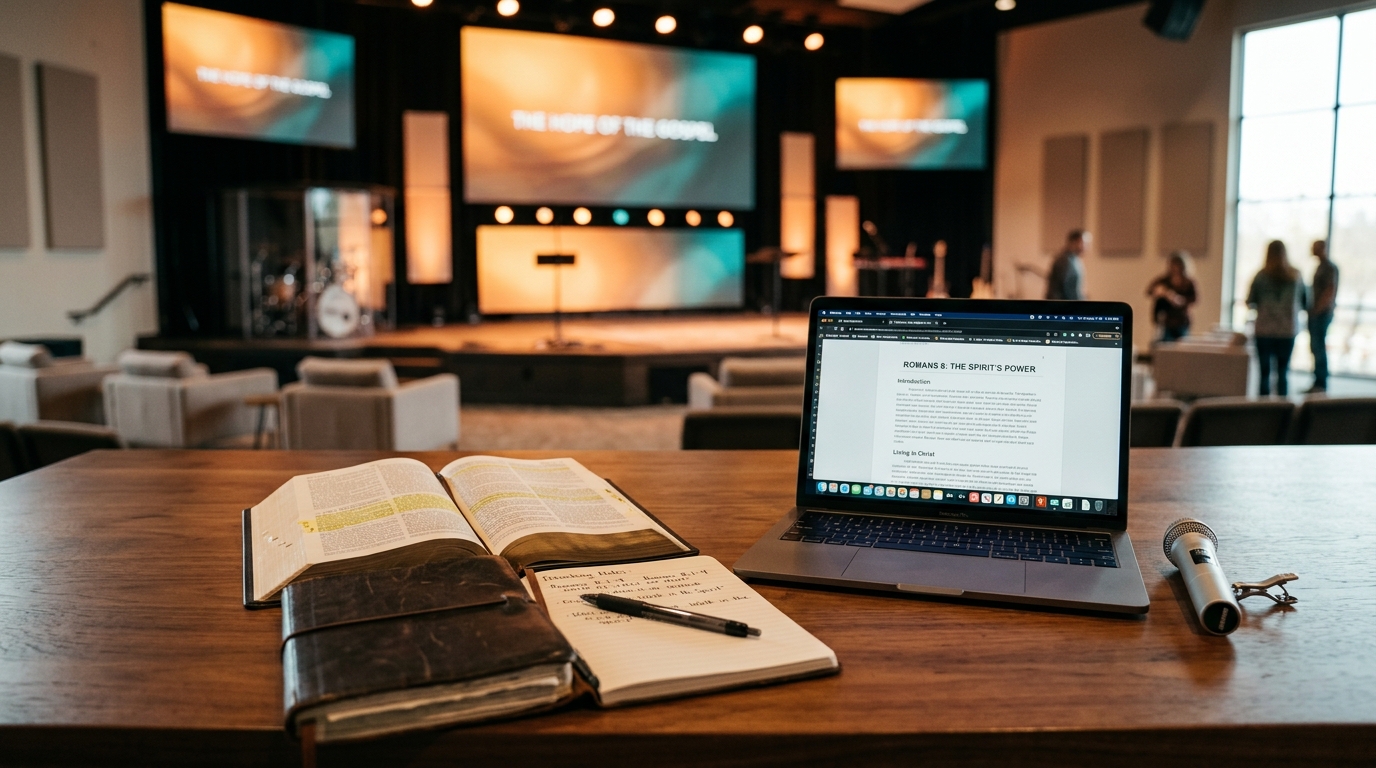

You've written your exegesis paper. You've outlined your three points. You've crafted an introduction that would make your homiletics professor proud. Now comes the part most seminary students get wrong: practicing sermon delivery.
Here's the problem: most seminary preaching practice happens in your head while you're driving to class, or in a quick run-through the night before you preach in chapel. You think through what you'll say, maybe mumble a few transitions out loud, and call it preparation. Then you stand up to preach and discover that what sounded brilliant in your mind comes out choppy, rushed, or disconnected when you actually say it.
The gap between knowing what to say and delivering it effectively is where most seminary students struggle. Classroom homiletics teaches you sermon construction—exegesis, structure, theology. But practicing sermon delivery is a different skill entirely, and it's the one that determines whether your carefully crafted message actually connects with real people in real churches. This guide will show you sermon practice techniques that prepare you for the pulpit, not just the grade.
Quick Answer: Effective sermon delivery practice requires 3-5 full run-throughs out loud in a standing position, ideally recorded for review. Practice should focus on transitions, pacing, and natural delivery rather than memorization. Seminary students who practice delivery separately from content preparation see 40-60% improvement in clarity and confidence compared to mental rehearsal alone.
Key Takeaways
- Practice out loud, standing up — mental rehearsal doesn't reveal pacing problems, awkward transitions, or filler word patterns that only emerge when you actually speak
- Record every practice session — you can't evaluate what you can't hear; recording reveals delivery issues you'll never catch in the moment
- Separate content prep from delivery practice — writing your sermon and practicing delivery are two different tasks that require different mental modes and time blocks
- Practice transitions more than content — the places where you move between points are where most delivery breakdowns happen, not in the middle of your points
What Makes Practicing Sermon Delivery Different from Sermon Preparation?
Practicing sermon delivery is not the same thing as preparing your sermon content. Most seminary students conflate these two tasks, which is why their practice sessions feel inefficient and their delivery feels unprepared.
Sermon preparation is cognitive work—research, exegesis, outlining, writing. It happens at a desk with books and a laptop. Practicing sermon delivery is physical and vocal work—pacing, breathing, gestures, eye contact, transitions. It happens standing up, out loud, in real time. Communication experts recommend treating these as separate phases with different goals and different environments.
When you practice delivery, you're not trying to perfect your content anymore. You're trying to internalize the flow so that when you preach, your mind is free to connect with people instead of scrambling to remember what comes next. You're training your voice to handle the pacing. You're identifying the moments where you naturally stumble so you can smooth them out. You're building muscle memory for transitions.
Think of it this way: a musician doesn't just read sheet music and call it practice. They play the piece multiple times, working on tempo, dynamics, and difficult passages. Your sermon is the same. The manuscript is the sheet music. Practicing sermon delivery is learning to play it.
How to Structure Your Sermon Practice Sessions (A Step-by-Step Method)
Most seminary students practice sermons haphazardly—a run-through here, a quick review there, whenever they can squeeze it in. Research on public speaking suggests that structured, intentional practice sessions produce significantly better results than sporadic rehearsal.
Here's a proven method for practicing sermon delivery that actually prepares you:
Session 1: The Rough Run-Through (2-3 days before you preach) Stand up. Preach the entire sermon out loud from beginning to end without stopping, even when you mess up. Don't aim for perfection—aim for completion. This first pass reveals where your content is solid and where it's shaky. You'll discover transitions that don't work, illustrations that feel forced, and sections that run too long. Take notes immediately after on what felt awkward.
Session 2: The Transition Focus (1-2 days before) Don't preach the whole sermon. Instead, practice just the transitions between major sections. Start your introduction, then jump to the transition into point one. Practice that bridge three times. Then practice the transition from point one to point two. Then two to three. Then the move into your conclusion. These connective moments are where most delivery breakdowns happen, so isolate and drill them.
Session 3: The Timed Run-Through (1 day before) Preach the entire sermon again, this time with a timer. Your goal is to match your target length (most seminary chapel sermons are 15-20 minutes). If you're running long, identify which sections to trim. If you're running short, note where you can add depth without padding. This session also reveals your natural pacing—are you rushing? Dragging? Adjust accordingly.
Session 4: The Recorded Delivery (morning of, if possible) Record yourself preaching the full sermon on your phone. Then watch it. This is uncomfortable but essential. You'll catch filler words, distracting gestures, flat vocal delivery, and moments where you lose energy. Make mental notes of 2-3 specific things to adjust when you preach for real.
Session 5: The Final Walk-Through (1 hour before) Don't preach the whole thing again—you'll exhaust yourself. Instead, walk through your outline mentally, speaking only your transitions and key phrases out loud. This keeps the flow fresh without draining your energy or voice.
Common Sermon Practice Mistakes Seminary Students Make (And How to Fix Them)
The biggest mistake seminary students make when practicing sermon delivery is treating it like memorization. You sit at your desk, read through your manuscript five times, and assume that's practice. It's not. Studies on audience retention show that memorized delivery often feels stiff and disconnected because you're focused on recall, not communication.
Here's what actually happens: you memorize your sermon word-for-word, then stand up to preach and panic when you can't remember the exact phrasing. You freeze, stumble, or rush through sections trying to get back on track. Your congregation senses the tension. The message feels mechanical instead of natural.
Better approach: internalize the flow, not the script. Practice until you know the sequence of ideas and the key phrases that anchor each section, but give yourself freedom to express those ideas naturally in the moment. This is called extemporaneous delivery, and it's what most effective preachers actually do, even when they've prepared extensively.
Another common mistake: practicing in your head while doing other things. You're driving to campus, mentally rehearsing your sermon. You're in the shower, thinking through your points. This feels productive, but it doesn't prepare you for actual delivery. Mental rehearsal doesn't reveal pacing problems, doesn't train your voice, and doesn't build the physical stamina you need to preach with energy.
Fix: carve out dedicated time to practice standing up, out loud, in an environment that approximates where you'll actually preach. If you're preaching in a chapel, practice in a classroom. If you're preaching in a church, practice in a space with similar acoustics. Your body and voice need to experience the physical reality of delivery, not just the mental concept.
Third mistake: practicing alone without any feedback mechanism. You preach to an empty room, feel good about it, and assume you're ready. But without recording yourself or getting input from someone else, you have no idea how you actually sound. Best practices in sermon delivery indicate that self-awareness is the foundation of improvement, and you can't develop self-awareness without external feedback.
Fix: record every practice session on your phone. Watch or listen to at least one full run-through before you preach. If possible, practice in front of a roommate, spouse, or trusted friend and ask them one specific question: "Where did I lose you?" or "What felt unclear?" Don't ask for general feedback—ask targeted questions that reveal delivery issues.
What to Focus on During Each Practice Session
Not every practice session should focus on the same things. According to homiletics research, effective sermon practice follows a progression from content mastery to delivery refinement. Here's what to prioritize in each stage:
Early Practice (First 1-2 Run-Throughs): Focus on flow and transitions. Can you move smoothly from your introduction to point one? From point one to point two? Does your illustration connect naturally to your application? Don't worry about perfect phrasing or vocal variety yet—just make sure the structure holds together when you say it out loud.
Middle Practice (Run-Throughs 3-4): Focus on pacing and timing. Are you rushing through sections that need space to breathe? Are you dragging through parts that should move faster? Use a timer and note where you naturally speed up or slow down. Adjust your content or delivery to match your target length.
Late Practice (Final 1-2 Run-Throughs): Focus on energy and emphasis. Where do you want to lean in with conviction? Where should you pause for effect? Where does your voice need to rise or fall? This is when you add the dynamics that make delivery compelling, not just clear.
Final Walk-Through: Focus on confidence and calm. Don't practice the whole sermon—just remind yourself of the flow. Speak your transitions and key phrases out loud to keep them fresh. Pray. Trust your preparation.
One specific technique that helps seminary students improve delivery: practice your opening and closing more than anything else. Communication experts recommend spending 40% of your practice time on the first two minutes and the last two minutes of your sermon. Why? Because your opening sets the tone and your closing determines whether people respond. If you nail those two moments, you can recover from mistakes in the middle. If you fumble those two moments, even a solid middle section won't save the message.
How to Use Recording and Playback to Improve Your Delivery
Most seminary students resist recording their practice sessions because watching yourself preach feels awkward. But this is the single most effective sermon practice technique for identifying and fixing delivery problems you can't catch in the moment.
Here's what to listen for when you review a recorded practice session:
Filler Words: Count how many times you say "um," "uh," "like," "you know," or "so." If it's more than 10-15 in a 20-minute sermon, you have a filler word problem. The fix isn't to eliminate them entirely—it's to replace them with pauses. When you feel the urge to say "um," just pause instead. Silence feels longer to you than it does to your listeners.
Pacing Inconsistencies: Notice where you speed up and where you slow down. Most seminary students rush through transitions because they're nervous about losing their place. They also tend to slow down during illustrations because they're trying to be engaging. Both patterns disrupt flow. Aim for consistent pacing with intentional variations for emphasis, not anxiety-driven speed changes.
Vocal Monotony: Does your voice stay at the same pitch and volume throughout? If so, you're missing opportunities for emphasis and connection. Listen for moments where your voice naturally rises or falls—those are usually the moments where you feel conviction or emotion. Lean into those variations. Don't flatten them out trying to sound "professional."
Energy Drops: Most preachers lose energy in the middle of their sermon. You start strong, finish strong, but sag in the middle. If you notice this pattern, it's usually because you're mentally exhausted from trying to remember what comes next. The fix: internalize your transitions better so your mind is free to engage with the content, not scramble for recall.
Awkward Transitions: Listen for the moments where you say things like, "So, moving on to my next point..." or "Now I want to talk about..." These are verbal crutches that signal you don't have a smooth bridge. Go back and craft actual transition sentences that connect the ideas, not just announce the shift.
One practical tip: don't try to fix everything at once. Pick 1-2 specific issues from your recording and focus on those in your next practice session. If you try to fix filler words, pacing, vocal variety, and transitions all at the same time, you'll overwhelm yourself and improve nothing. Incremental progress beats perfectionism.
For more on how to identify and eliminate filler words specifically, see our guide on filler words in sermons.
Practicing Sermon Delivery vs. Memorizing Your Sermon: What's the Difference?
Many seminary students confuse practicing sermon delivery with memorizing their manuscript. They're not the same thing, and the distinction matters.
Memorizing means you can recite your sermon word-for-word from memory. Practicing delivery means you've internalized the flow, key phrases, and transitions well enough to preach naturally without constantly referring to notes. The first creates rigidity. The second creates freedom.
Here's why memorization often backfires: when you memorize a sermon, you create a mental script. If you forget a word or phrase mid-delivery, your brain panics because you've lost your place in the script. You freeze, stumble, or rush to get back on track. Your congregation senses the tension. The message feels forced.
When you practice delivery without full memorization, you internalize the structure and key ideas, but you give yourself permission to express those ideas naturally in the moment. If you forget a specific phrase, it doesn't matter—you know where you're going and how to get there. Your delivery feels conversational, not robotic.
That said, some parts of your sermon should be memorized: your opening sentence, your closing call to action, and your key transitional phrases. These anchors give you confidence and clarity at critical moments. Everything else can be internalized without word-for-word recall.
Think of it this way: you don't memorize conversations with friends, but you know what you want to say and how to say it. That's the goal for sermon delivery—prepared spontaneity, not scripted rigidity.
For more on different preparation methods and when to use each, see our guide on sermon preparation methods.
How to Practice Sermon Delivery When You Don't Have Much Time
Seminary schedules are brutal. Between Greek exegesis, systematic theology papers, and part-time ministry work, you don't always have hours to practice sermon delivery. Here's how to make the most of limited practice time:
The 20-Minute Minimum: If you only have 20 minutes, do one full run-through standing up and record it. Don't stop when you mess up—finish the whole sermon. Then listen to the first five minutes and the last five minutes on playback. Those two sections are your highest-leverage practice areas.
The Transition Drill: If you only have 10 minutes, skip the full sermon and practice just your transitions. Start your intro, then jump to the bridge into point one. Practice that three times. Then practice the bridge from point one to point two. Then two to three. Then into your conclusion. This isolates the places where most delivery breakdowns happen.
The Key Phrase Method: If you only have 5 minutes, write down one key phrase or sentence from each major section of your sermon. Then practice speaking just those phrases out loud, in order, with confidence. This keeps the flow fresh without requiring a full run-through.
The Mental Walk-Through: If you're literally walking to chapel and have 2 minutes, don't try to practice out loud. Instead, mentally walk through your outline and visualize yourself preaching each section. Picture the room, the people, the moment. This builds confidence even when you can't practice physically.
The key principle: some practice is always better than no practice, but the quality of practice matters more than the quantity. One focused 20-minute session where you stand up, speak out loud, and record yourself will prepare you better than three hours of mental rehearsal while doing other things.
Frequently Asked Questions
How many times should I practice my sermon before preaching it? Most effective preachers practice a sermon 3-5 times out loud before delivering it. The first run-through reveals structural issues. The second focuses on transitions. The third refines pacing and timing. The fourth and fifth build confidence and smooth out remaining rough spots. Fewer than three practices usually means you're under-prepared. More than six can lead to over-rehearsal, where your delivery starts to feel stale or mechanical.
Should I practice my sermon in front of other people? Practicing in front of one or two trusted people can be helpful, especially if they're willing to give specific feedback on clarity and engagement. However, don't practice in front of a group larger than 2-3 people—it creates performance pressure that doesn't reflect the actual preaching environment. The goal is feedback, not a trial run. Ask specific questions like "Where did you lose the thread?" or "What felt unclear?" rather than "How was it?"
Is it better to practice with a manuscript, notes, or no notes at all? Practice the way you plan to preach. If you're preaching from a full manuscript, practice with the manuscript. If you're using an outline, practice with the outline. If you're going note-free, practice without notes. Don't practice one way and then preach another—it creates cognitive dissonance that undermines your delivery. That said, even if you plan to use notes, do at least one practice run without them to test how well you've internalized the flow.
How do I know if I'm practicing too much or not enough? You're practicing too much if your delivery starts to feel robotic, if you're memorizing word-for-word instead of internalizing flow, or if you're exhausted before you even preach. You're practicing too little if you're still stumbling over transitions, if you don't know your opening and closing cold, or if you're significantly over or under your target time. The sweet spot is when you feel confident in the flow but still have energy and spontaneity when you preach.
What should I do if I mess up during practice? Don't stop and restart—keep going. One of the most important skills you develop through practicing sermon delivery is recovery. When you mess up in practice and push through anyway, you're training yourself to recover gracefully when you mess up in the pulpit (which you will). Note what went wrong, but finish the run-through. Then go back and practice that specific section again afterward.
How can I practice sermon delivery if I don't have access to a pulpit or stage? You don't need a pulpit to practice effectively. Stand up in your dorm room, apartment, or any space where you can speak out loud without disturbing others. If possible, practice in a room that's similar in size to where you'll preach—this helps you calibrate your volume and energy. Some seminary students practice in empty classrooms or chapel spaces during off-hours, which can be helpful for getting comfortable with the actual environment.
About Preach Better: Preach Better is a sermon delivery analysis platform that helps pastors get honest, specific feedback on their communication. Built around four pillars—Clarity, Connection, Conviction, and Call to Action—it provides coaching grounded in specific moments from your message, not vague generalities. For seminary students, it's like having a homiletics professor review every practice session, identifying exactly where your delivery needs work and how to improve it.
The Bottom Line: Practice Delivery Like You Practice Exegesis
You wouldn't show up to preach without doing exegesis. You wouldn't walk into the pulpit without knowing your text, your context, and your theology. So why would you show up without practicing sermon delivery?
Most seminary students spend 10-15 hours preparing sermon content and 30 minutes practicing delivery. That ratio is backward. Communication research consistently shows that delivery accounts for 60-70% of a message's impact, while content accounts for 30-40%. You can have brilliant exegesis and sound theology, but if your delivery is unclear, rushed, or disconnected, your message won't land.
The good news: practicing sermon delivery is a skill you can develop with intentional, structured practice. It's not about natural talent or charisma. It's about repetition, feedback, and refinement. Stand up. Speak out loud. Record yourself. Review. Adjust. Repeat.
Your first sermon won't be perfect. Neither will your tenth. But every time you practice with intention, you're building the muscle memory, vocal stamina, and confidence that will serve you for decades of ministry. Start now, while you're still in seminary and the stakes are lower. Develop sermon practice techniques that become habits. Because when you graduate and step into a pulpit every week, you won't have time to figure this out from scratch.
Ready to get feedback on your sermon delivery that's as specific as your exegesis? Preach Better analyzes your delivery across all four pillars—Clarity, Connection, Conviction, and Call to Action—and shows you exactly where to improve, grounded in specific moments from your message. Because every message matters, and every practice session is an opportunity to get better.