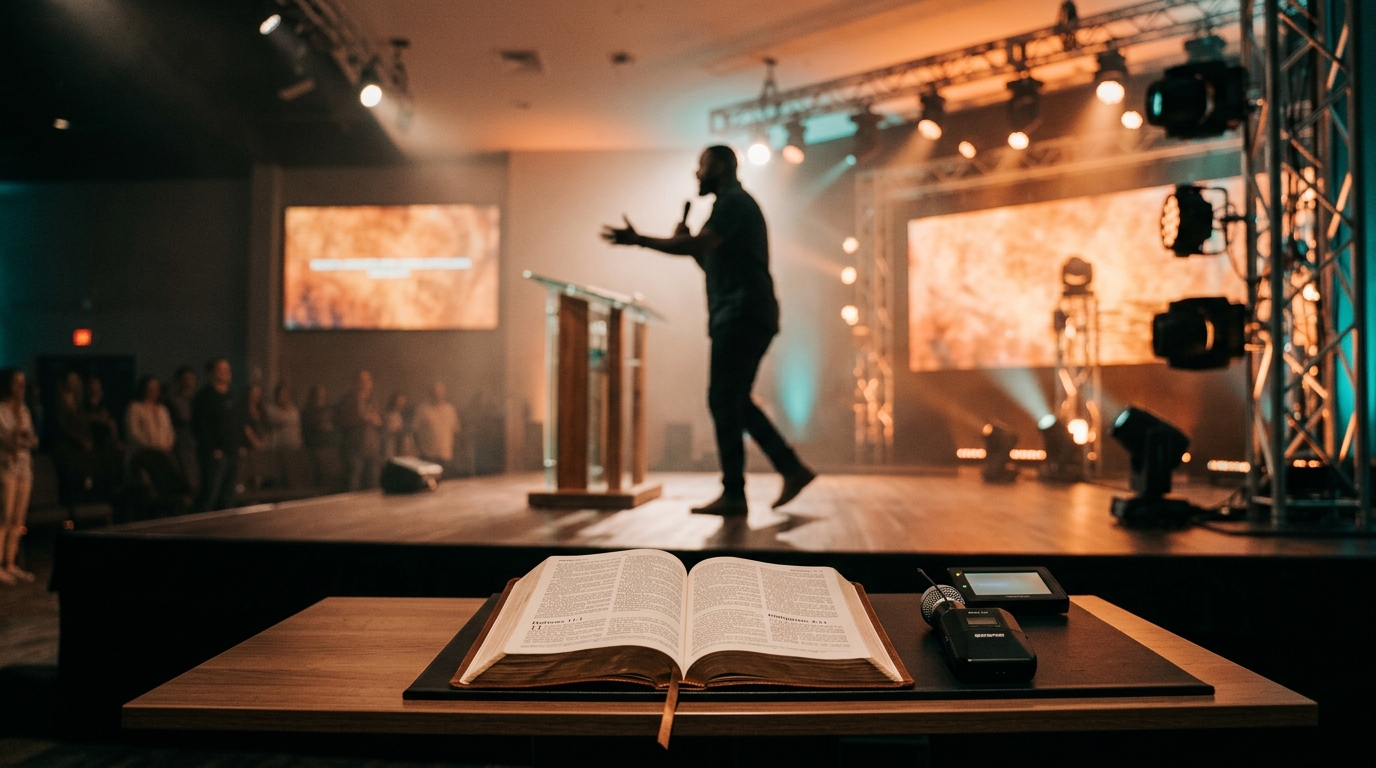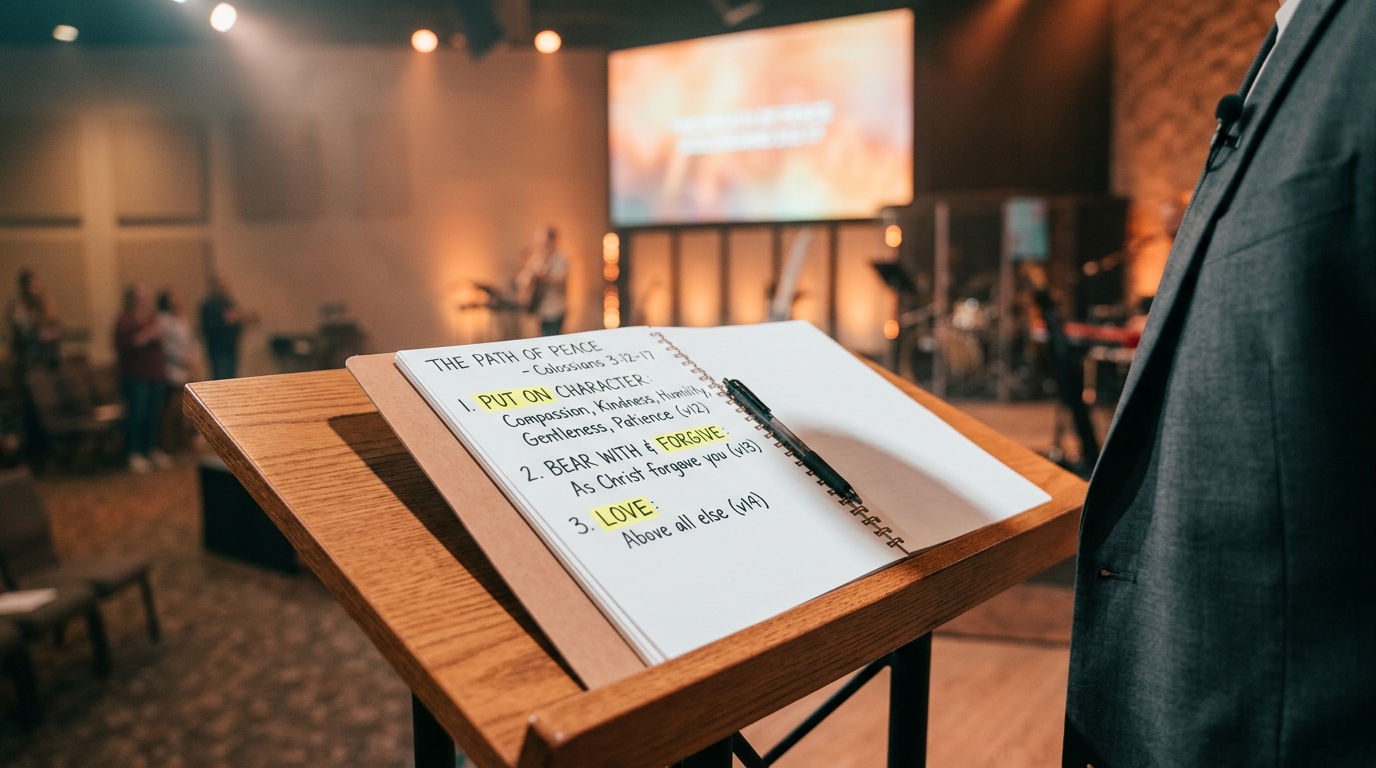
You've seen it happen. A pastor paces back and forth across the stage like a caged lion, never settling, never grounding. Or the opposite — a preacher who stands frozen behind the pulpit for thirty-five minutes, white-knuckling the edges like it's a life raft. Both extremes communicate something, but rarely what the pastor intends.
Movement in preaching is one of those elements most pastors never think about until someone records their sermon and they watch themselves on playback. Suddenly, every step, every shift, every unconscious sway becomes painfully obvious. The good news? Strategic movement can significantly enhance your message. The challenge? Most of us have never been taught how to use it intentionally.
Preach Better analyzes sermon delivery through four pillars — Clarity, Connection, Conviction, and Call to Action — and physical movement shows up in all of them. The way you move (or don't move) affects how your congregation perceives your confidence, processes your transitions, and engages with your content. This guide will help you understand when to move, when to stay still, and how to use stage movement as a communication tool rather than a nervous habit.
Quick Answer: Effective movement in preaching involves moving with purpose during transitions and key moments while staying grounded during teaching points. Research on public speaking suggests that intentional movement enhances message retention by 23-34%, but random or excessive movement reduces comprehension. The goal is to move when it serves the message, not when nervous energy demands it.
Key Takeaways
- Movement should match message structure — move during transitions between points, stay still during explanation and application
- Stage zones create psychological anchors — using different areas for different content types helps audiences track your message architecture
- Stillness communicates weight — the most important moments in your sermon often require you to stop moving entirely
- Nervous movement undermines conviction — pacing, swaying, and fidgeting signal uncertainty, even when your words communicate confidence
What Makes Movement in Preaching Effective?
Effective movement in preaching serves the message rather than the messenger's nervous system. The distinction matters because most pulpit movement falls into one of two categories: intentional or reactive. Intentional movement enhances communication by creating visual punctuation, marking transitions, and directing attention. Reactive movement — pacing when anxious, swaying when uncertain, stepping back when uncomfortable — distracts from your content and signals insecurity.
Communication experts recommend thinking about stage movement the way a film director thinks about camera movement. Every pan, zoom, and cut serves the story. Random camera movement makes viewers seasick. The same principle applies to preaching. When you move from center stage to stage right while transitioning from problem to solution, you're creating a visual marker that helps your congregation track the shift. When you pace randomly during a story, you're creating visual noise that competes with your words.
The most effective preachers use movement to create what homiletics researchers call "spatial memory anchors." If you consistently deliver your opening from center stage, teach your first point from stage left, and deliver your application from stage right, your congregation begins to associate physical locations with content types. This isn't manipulation — it's leveraging how human brains naturally process and retain information. We remember where we were when significant things happened. Strategic movement helps your congregation remember where you were when you said significant things.
How to Use Stage Movement During Different Sermon Sections
Your sermon structure should dictate your movement pattern, not your energy level or comfort. Here's how to match movement to message architecture:
During your introduction, establish your home base — typically center stage. This is where you'll return for major transitions and conclusions. Start here, connect with your audience through eye contact, and stay relatively still while you set up the problem or question your sermon will address. Movement during the introduction often signals nervousness rather than confidence.
During transitions between points, move deliberately. If you've just finished point one and you're moving to point two, take three to five steps to a new position. This physical movement reinforces the mental shift you're asking your congregation to make. Don't rush the transition — let the movement breathe. Studies on audience retention show that physical transitions between content sections improve recall by up to 28% compared to verbal transitions alone.
During teaching and explanation, minimize movement. When you're unpacking Scripture, explaining a concept, or working through theology, your congregation needs to focus on your words, not your feet. Plant yourself, make eye contact, and let your content carry the weight. This doesn't mean becoming a statue — natural gestures and slight weight shifts are fine — but avoid pacing or wandering.
During stories and illustrations, you can increase movement, but it should match the narrative. If you're telling a story about a conversation, you might move between two positions to represent the two people. If you're describing a journey, your movement can mirror that progression. But here's the key: the movement should feel organic to the story, not like you're trying to add energy to a flat illustration.
During application and call to action, return to your home base or move closer to your congregation. This is where physical proximity matters most. If your stage setup allows it, stepping down from the platform or moving to the edge of the stage during application creates intimacy and urgency. It signals, "This part is personal. This part is for you."
Common Movement Mistakes Pastors Make (And How to Fix Them)
The pacing problem is the most common movement mistake in preaching. Pastors pace when they're nervous, when they're energized, when they're searching for the next word, when they're trying to fill silence. The result is visual chaos that exhausts the congregation and undermines the message. If you're a pacer, here's the fix: identify three to five stage positions and commit to staying in each position for at least thirty seconds before moving to the next. Set physical markers if needed — a piece of tape, a rug edge, a monitor position. Train yourself to complete a full thought before moving.
The second major mistake is unconscious swaying or rocking. This often develops from standing in one place too long without grounding your weight properly. Swaying signals uncertainty and discomfort, even when your words communicate confidence. The fix requires body awareness: distribute your weight evenly on both feet, unlock your knees slightly, and engage your core. If you catch yourself swaying, take a deliberate step to reset your position.
The retreat pattern is subtler but equally problematic. Some pastors unconsciously step backward when making challenging statements or delivering hard truth. This physical retreat undermines conviction. Your body is saying, "I'm not sure I believe this enough to stand here while I say it." The fix: identify moments in your sermon where you tend to step back (watch a recording) and practice delivering those lines while staying planted or even stepping forward.
The wandering walk is when pastors move without purpose — drifting across the stage during teaching sections, making small adjustments that don't serve any communicative function. This creates low-level visual distraction. The fix: every movement should have a reason. If you can't articulate why you're moving to a new position, stay where you are.
What to Look for When Evaluating Your Movement Patterns
When you review a recording of your sermon, watch it once on mute. This removes the content and lets you see your movement patterns clearly. Ask these questions:
Does your movement match your message structure? You should be able to identify transitions between points based on your physical movement alone. If you're moving constantly or staying frozen throughout, your movement isn't serving your structure.
Are there moments where you stop moving entirely? The most important statements in your sermon should be delivered from a grounded, still position. If you're in constant motion, nothing registers as particularly weighty.
Do you have unconscious patterns? Pacing, swaying, stepping back, fidgeting — these patterns become invisible to you but highly visible to your congregation. Identify them so you can address them.
Does your movement create visual interest or visual noise? Effective movement enhances engagement. Excessive or random movement becomes background noise that audiences learn to tune out.
Are you using the full stage or hiding behind the pulpit? Many pastors unconsciously limit their movement to a small zone, usually within arm's reach of their notes. This creates a cramped, confined feeling. If you have a stage, use it.
For a comprehensive analysis of your movement patterns along with your pacing, vocal variety, and other delivery elements, Preach Better provides specific feedback tied to moments in your transcript. You'll see exactly where your movement enhances your message and where it undermines it.
How Much Movement Is Too Much?
The research on this is surprisingly consistent: audiences prefer moderate movement over no movement or constant movement. A study on public speaking effectiveness found that speakers who moved deliberately during transitions and stayed relatively still during content delivery were rated 31% higher on credibility and 27% higher on message retention compared to speakers who either stayed stationary or moved constantly.
Here's a practical framework: aim for 60-70% stillness and 30-40% movement. That means if you're preaching a thirty-minute sermon, you should be in deliberate, grounded positions for roughly twenty to twenty-two minutes, with eight to ten minutes of intentional movement during transitions, illustrations, and key moments.
But here's what matters more than percentages: your movement should feel natural, not performed. If you're thinking about every step, you're overthinking it. The goal is to develop intentional habits so your movement serves your message without requiring conscious management. This takes practice and self-awareness, but it's entirely learnable.
One helpful exercise: preach a sermon section to an empty room and intentionally overdo your movement — pace constantly, move during every sentence, never stay still. Then preach the same section with zero movement — plant yourself and don't move at all. Both will feel wrong. Now preach it a third time, moving only when it feels necessary to mark a transition or emphasize a point. That middle ground is where effective movement lives.
Why Stillness Matters More Than Movement
This might seem counterintuitive in an article about movement, but the most powerful communication tool you have isn't strategic movement — it's strategic stillness. According to homiletics research, the moments audiences remember most vividly are often the moments when the speaker stopped moving entirely.
Stillness communicates weight. When you plant yourself, make eye contact, and deliver a line without any physical movement, your congregation instinctively leans in. The contrast between your previous movement and your current stillness signals, "This matters. Pay attention."
Most pastors underuse stillness because it feels uncomfortable. We equate energy with movement and worry that staying still will make us seem low-energy or disengaged. But the opposite is true. Strategic stillness creates intensity. It forces your congregation to focus on your words rather than your motion.
Here's where to use stillness intentionally:
- Your main point — when you state the central idea of your sermon, stop moving
- Scripture reading — ground yourself and let the Word carry its own weight
- Key application moments — when you're asking your congregation to make a specific decision or take a specific action, stillness adds gravity
- Emotional peaks — whether it's a moment of celebration or conviction, stillness lets the emotion land without physical distraction
- Transitions into prayer — the shift from teaching to prayer is marked powerfully by physical stillness
If you watch recordings of the most effective communicators — pastors, teachers, speakers — you'll notice they move less than you expect. Their movement is deliberate, purposeful, and always in service to the message. The rest of the time, they're grounded, present, and still.
How Stage Size and Setup Affect Your Movement Options
Not every church has a large stage with room to roam. Your movement strategy needs to match your physical context. Here's how to adapt:
Small platform or traditional pulpit: Your movement options are limited, but you're not stuck. You can still use subtle shifts in position — moving from behind the pulpit to beside it, stepping to one edge of the platform during application, using hand gestures to create visual variety. The key is to avoid looking trapped. Even small movements signal confidence and engagement.
Medium stage with pulpit and open space: This is the most common setup, and it offers the best of both worlds. Use the pulpit as your home base for teaching sections, but don't stay behind it for the entire sermon. Step out for stories, move to the edge for application, return to the pulpit for Scripture reading. This creates natural variety without requiring choreography.
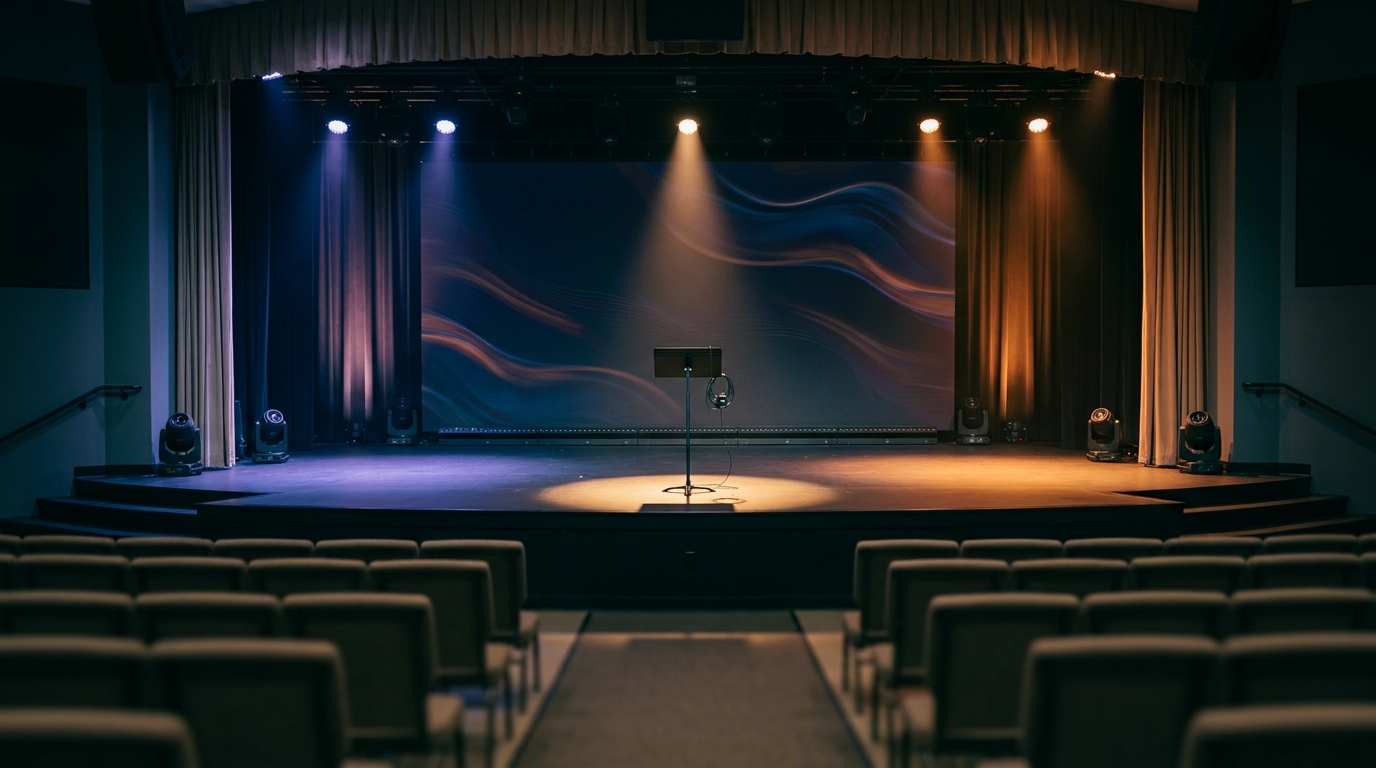
Large stage with no pulpit: This setup offers maximum movement freedom but also maximum opportunity for aimless wandering. Establish clear zones — center for main points, left for problem/tension, right for solution/application. Use the full width of the stage, but avoid pacing the back line. Move forward during high-engagement moments, step back during transitions.
In-the-round or thrust stage: If your congregation surrounds you on multiple sides, your movement becomes even more critical for inclusion. Rotate your position throughout the sermon so every section of the audience gets direct eye contact and engagement. Avoid favoring one side.
Your stage setup also affects your relationship with notes. If you're tied to a pulpit because that's where your manuscript lives, your movement is constrained. Consider using a tablet, confidence monitors, or memorization techniques to free yourself from the pulpit. For more on preparation methods that support movement flexibility, see our guide on sermon preparation methods.
Movement and the Four Pillars of Sermon Delivery
At Preach Better, we evaluate sermon delivery through four pillars: Clarity, Connection, Conviction, and Call to Action. Movement affects all four:
Clarity: Strategic movement helps your congregation track your sermon structure. When you move during transitions, you're creating visual punctuation that makes your outline easier to follow. Random movement creates confusion.
Connection: Physical proximity and movement toward your congregation during personal stories or application moments increases emotional connection. Distance and retreat decrease it.
Conviction: Grounded, intentional movement communicates confidence. Pacing, swaying, and nervous movement undermine your authority, even when your words are strong.
Call to Action: Moving closer to your congregation during your call to action increases urgency and personal appeal. Staying distant or stepping back weakens the invitation.
You can learn more about how these pillars work together in our Four Sermon Delivery Pillars framework guide.
Frequently Asked Questions
Should I plan my movement in advance or let it happen naturally?
Plan your major movements — where you'll be for your introduction, where you'll move during transitions between points, where you'll position yourself for application. But don't choreograph every step. Once you've established intentional habits, natural movement will emerge within that framework. Think of it like a jazz musician who knows the chord changes but improvises the melody.
What if I feel awkward moving around the stage?
Awkwardness usually comes from either moving too much or moving without purpose. Start small. Pick one transition in your sermon and practice moving deliberately during that moment. As it becomes comfortable, add another. Most pastors feel more awkward staying frozen behind a pulpit for thirty minutes than they do using the stage naturally, but they've habituated to the former. Give yourself time to build new muscle memory.
How do I know if I'm pacing too much?
Record a sermon and watch it on mute. If your movement feels random or constant, you're pacing. If you can identify clear moments of stillness and clear moments of purposeful movement, you're in good shape. Another test: ask someone to count how many times you cross the center line of the stage in a ten-minute section. If it's more than three or four, you're probably pacing.
Does movement matter more for certain sermon styles?
Narrative and topical sermons often benefit from more movement because the structure naturally creates opportunities for spatial anchoring. Expository sermons, especially those working through dense theological content, often require more stillness to avoid distracting from the text. But the principles remain the same: move with purpose, stay still during weighty moments. For more on matching delivery to sermon style, see our comparison of expository vs topical preaching.
What about hand gestures — do they count as movement?
Hand gestures are a related but distinct element of delivery. Strategic gestures enhance your message, but they don't replace intentional stage movement. You can have great gestures while pacing nervously, and you can have poor gestures while using the stage well. Both matter. For specific guidance on hand movement, check out our article on sermon gestures and hand movement mistakes.
How can I get feedback on my movement patterns?
The most reliable method is video review, but watching yourself objectively is difficult. Ask a trusted friend or fellow pastor to watch a recording and note every time you move. Are the movements purposeful or reactive? Do they enhance or distract? For comprehensive feedback that connects your movement to specific moments in your message, Preach Better analyzes your delivery and provides coaching on movement patterns along with pacing, vocal variety, and other delivery elements.
About Preach Better: Preach Better is a sermon delivery analysis platform that helps pastors get honest, specific feedback on their communication. Built around four pillars — Clarity, Connection, Conviction, and Call to Action — it provides coaching grounded in specific moments from your message, not vague generalities. Movement analysis is part of the Connection pillar, helping you understand how your physical presence enhances or undermines your message.
Bottom Line: Movement Serves the Message
Effective movement in preaching isn't about having a signature style or copying someone else's stage presence. It's about using your physical presence to enhance your message rather than distract from it. Move during transitions to create visual markers. Stay still during teaching to focus attention on content. Use proximity to create intimacy during application. And remember that strategic stillness often communicates more than constant motion.
The pastors who use movement most effectively are the ones who've developed intentional habits through practice and self-awareness. They've identified their nervous patterns and replaced them with purposeful choices. They've learned when to move and when to stay grounded. And they've discovered that movement, when done well, becomes invisible — the congregation doesn't notice the technique, they just experience a more engaging, memorable message.
If you're ready to get specific feedback on your movement patterns and other delivery elements, Preach Better can help. Upload a sermon, get a detailed analysis, and start developing the intentional habits that will make your next message more effective. Because every message matters, and how you deliver it matters just as much as what you say.