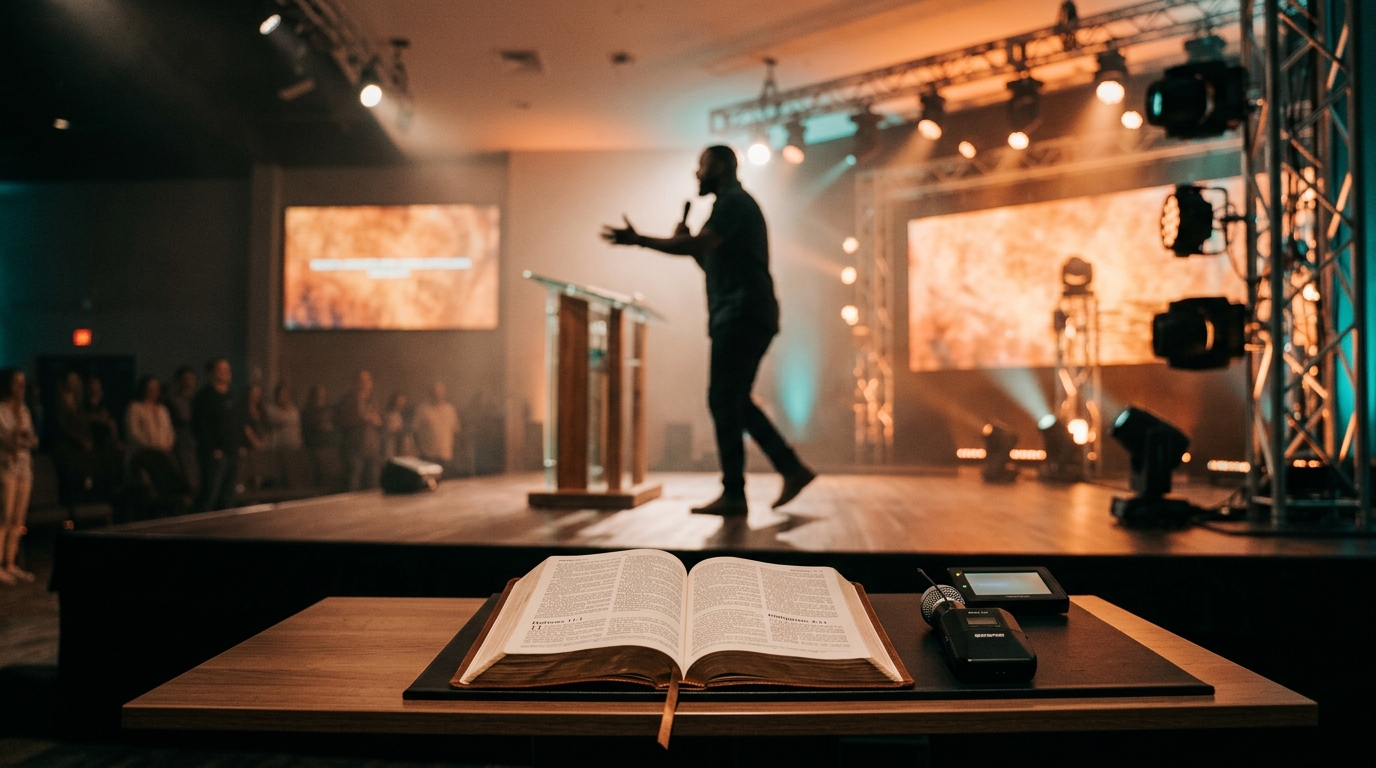
You've watched preachers command a stage without a single note in sight. They move freely, make eye contact, and seem completely present with their congregation. Meanwhile, you're wondering if you could ever preach that way—or if you even should.
The question of preaching without notes isn't really about memorization tricks or performance techniques. It's about finding a delivery method that serves your message and your congregation best. For some pastors, note-free preaching unlocks a level of connection they never achieved with a manuscript. For others, it's an unnecessary pressure that distracts from preparation.
This guide will help you understand what note-free preaching actually requires, when it serves your message well, and how to develop the skill if you decide it's right for you. Whether you're considering the shift or just curious about the method, you'll learn what works—and what doesn't—based on real pastoral experience.
Quick Answer: Preaching without notes requires thorough preparation, strategic memorization of structure (not word-for-word content), and practice with your material. Most pastors who preach note-free spend 15-20 hours preparing, use mental frameworks to organize content, and rehearse their sermon 3-5 times before delivery. The method works best for conversational teaching styles and shorter messages (25-35 minutes).
Key Takeaways
- Note-free preaching isn't about memorization—it's about internalizing your message structure so deeply that you can teach it conversationally without reference materials
- Preparation time typically increases by 30-40% when transitioning from notes to note-free delivery, but many pastors report this deeper preparation improves overall message quality
- The method serves connection, not performance—the goal is increased audience engagement and presence, not impressing people with your memory
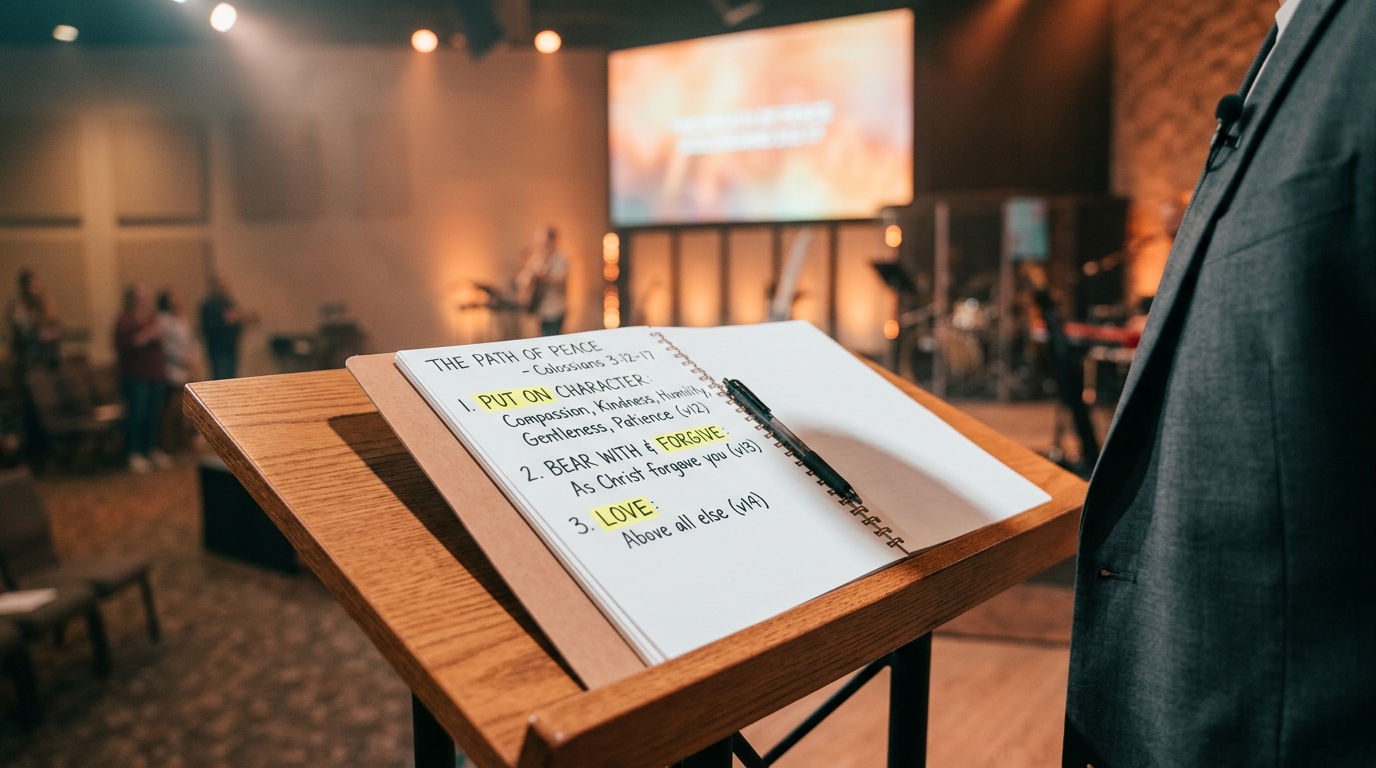
- Most successful note-free preachers use hybrid approaches—they might have a single notecard with structure, use slides as prompts, or keep a Bible open to key passages
What Does Preaching Without Notes Actually Mean?
Preaching without notes doesn't mean walking onto a stage with zero preparation and winging it. It means delivering a thoroughly prepared message without reading from or frequently referencing written materials during delivery.
Most pastors who preach note-free fall into one of three categories. First, there are those who memorize their sermon structure—the main points, key transitions, and essential illustrations—but allow the specific wording to emerge naturally during delivery. This is the most common approach and what most people mean when they say "preaching without notes."
Second, some pastors use minimal reference materials—a single notecard with their outline, slides that prompt their memory, or an open Bible marking key passages. They're not reading from notes, but they have strategic visual anchors available. Third, a smaller group fully memorizes their content word-for-word, essentially performing a memorized manuscript. This approach is rare and generally unnecessary for effective note-free preaching.
The distinction matters because many pastors assume note-free preaching requires perfect memorization, which creates unnecessary pressure. According to communication experts, the most effective note-free delivery focuses on message internalization rather than verbatim recall. You're aiming to know your content so well that you can teach it naturally, not recite it perfectly.
Why Do Some Pastors Choose Note-Free Preaching?
The primary advantage of preaching without notes is increased connection with your congregation. When you're not looking down at a manuscript or glancing at an iPad, you can maintain consistent eye contact, read the room, and adjust your delivery based on audience response.
Research on public speaking suggests that speakers who maintain eye contact 60-70% of the time are perceived as more credible and engaging than those who frequently reference notes. For preachers, this translates to stronger audience connection and better message retention. When you're fully present with your congregation, they're more likely to stay engaged with your content.
Note-free preaching also enables greater physical freedom. You can move across the stage naturally, use gestures without worrying about losing your place, and create a more conversational teaching environment. This matters especially for pastors whose teaching style is naturally dynamic or who preach in contemporary worship settings where movement is expected.
Many pastors report that preparing to preach without notes forces deeper message internalization. When you can't rely on reading your content, you must understand it at a level that allows natural explanation. This often results in clearer thinking, better organization, and more authentic delivery—even if you eventually decide to use some notes.
Finally, note-free preaching can reduce the distance between preacher and congregation. There's no physical barrier of a pulpit or lectern, no manuscript creating a psychological separation. For some congregations and teaching contexts, this accessibility significantly enhances the teaching moment.
How to Prepare a Sermon for Note-Free Delivery
Preparation for note-free preaching begins the same way all sermon prep begins—with thorough exegesis, clear structure, and thoughtful illustration. The difference comes in how you move from written preparation to internalized content.
Start by writing out your full manuscript or detailed outline. Yes, you'll eventually deliver without it, but the writing process clarifies your thinking and ensures you've developed your content fully. This isn't wasted effort—it's the foundation of effective note-free preaching. Most pastors who preach without notes still write out their full content during preparation.
Next, identify your sermon's structural framework. What are your main points? How do they connect? What transitions move you from one section to another? Create a visual map of your message flow—literally draw it out if that helps. This structural clarity becomes your mental roadmap during delivery.
Once you have your structure clear, begin rehearsing your content out loud. This is where many pastors fail in their transition to note-free preaching—they try to memorize by reading silently rather than practicing by speaking. Your goal is muscle memory and verbal fluency, not visual recall. Practice teaching your message to an empty room, recording yourself if possible.
During rehearsal, don't aim for identical wording each time. Instead, practice explaining your points in slightly different ways while maintaining your core structure. This builds flexibility and prevents the robotic delivery that comes from rote memorization. You're training yourself to teach the concept, not recite a script.
Identify your "anchor points"—the specific phrases, statistics, or quotes that must be exact. These might be your main point statements, a key verse, or a crucial illustration detail. These are worth memorizing precisely. Everything else can be delivered conversationally as long as you maintain your structural flow.
Finally, practice your transitions specifically. Studies on audience retention show that listeners are most likely to lose focus during transitions between points. Knowing exactly how you'll move from section to section prevents the awkward pauses and "uh, where was I?" moments that undermine note-free delivery.
Common Note-Free Preaching Mistakes (and How to Fix Them)
The biggest mistake pastors make when attempting note-free preaching is insufficient preparation. They assume that because they're not reading a manuscript, they don't need to prepare as thoroughly. The opposite is true—note-free preaching requires more preparation time, not less. If you're spending less than 15 hours preparing a note-free message, you're likely under-prepared.
Another common error is trying to memorize word-for-word rather than internalizing concepts. When you focus on exact wording, you create unnecessary pressure and increase the risk of blanking out mid-sermon. If you forget a specific phrase, you panic. But if you know your concepts deeply, you can explain them naturally even if the exact words escape you. Focus on idea fluency, not verbal precision.
Many pastors also fail to develop a recovery strategy for when they lose their place. And you will lose your place occasionally—every note-free preacher does. The fix is having a mental or physical anchor you can return to. Some pastors keep a single notecard with their outline visible but unused unless needed. Others use their slides as a backup reference. The key is having a safety net that doesn't become a crutch.
Some preachers mistake note-free delivery for unstructured rambling. Without the discipline of notes, they wander off topic, extend illustrations unnecessarily, or lose their central focus. Best practices in sermon delivery indicate that note-free preaching actually requires tighter structure than manuscript preaching, not looser. Your mental framework must be crystal clear because you don't have written guardrails.
Finally, many pastors attempt note-free preaching before they're ready, often because they're trying to emulate a preacher they admire. If you've been preaching from a full manuscript for years, the transition to note-free delivery should be gradual. Start with a single point preached without notes, then expand. Don't attempt a 45-minute note-free sermon as your first experiment.
Is Note-Free Preaching Right for Your Context?
Note-free preaching isn't universally superior to other delivery methods—it's a tool that serves some contexts better than others. Understanding when it works best helps you make a wise decision for your ministry setting.
Note-free delivery typically works best in contemporary worship environments where conversational teaching is expected. If your congregation sits in theater-style seating, uses modern technology, and expects dynamic communication, note-free preaching often fits the cultural expectations. It also works well for shorter messages (25-35 minutes) where the content load is manageable without reference materials.
The method serves topical preaching and narrative teaching particularly well. When you're telling a story or developing a single theme, the natural flow of note-free delivery enhances the message. It's more challenging—though not impossible—for complex expository preaching that requires detailed textual analysis or multiple cross-references.
Your personal teaching style matters significantly. If you're naturally conversational, think well on your feet, and prefer spontaneous interaction with your audience, note-free preaching may feel natural. If you're more analytical, prefer precise language, and think best through writing, manuscript or detailed notes might serve you better. Neither approach is wrong—they're different tools for different communicators.
Consider also your preparation schedule. Note-free preaching requires consistent, substantial preparation time. If you're bi-vocational, managing multiple teaching responsibilities, or in a season of life with limited prep time, the extra hours required for note-free delivery might not be sustainable. It's better to preach well with notes than poorly without them.
Finally, evaluate your congregation's expectations and your church's preaching tradition. In some contexts, preaching without notes signals accessibility and relevance. In others, it might be perceived as less serious or scholarly. Understanding your congregation's culture helps you make a choice that serves them well rather than just following a trend.
Hybrid Approaches: The Best of Both Worlds
Most successful note-free preachers don't actually preach completely without reference materials—they use strategic hybrid approaches that combine the benefits of note-free delivery with the security of having backup support.
The single notecard method is perhaps the most common hybrid approach. You keep one 3x5 card with your main points, key transitions, and any statistics or quotes that must be exact. The card stays in your pocket or on a stool nearby—visible but not constantly referenced. You preach without looking at it, but knowing it's there reduces anxiety and provides a safety net if needed.
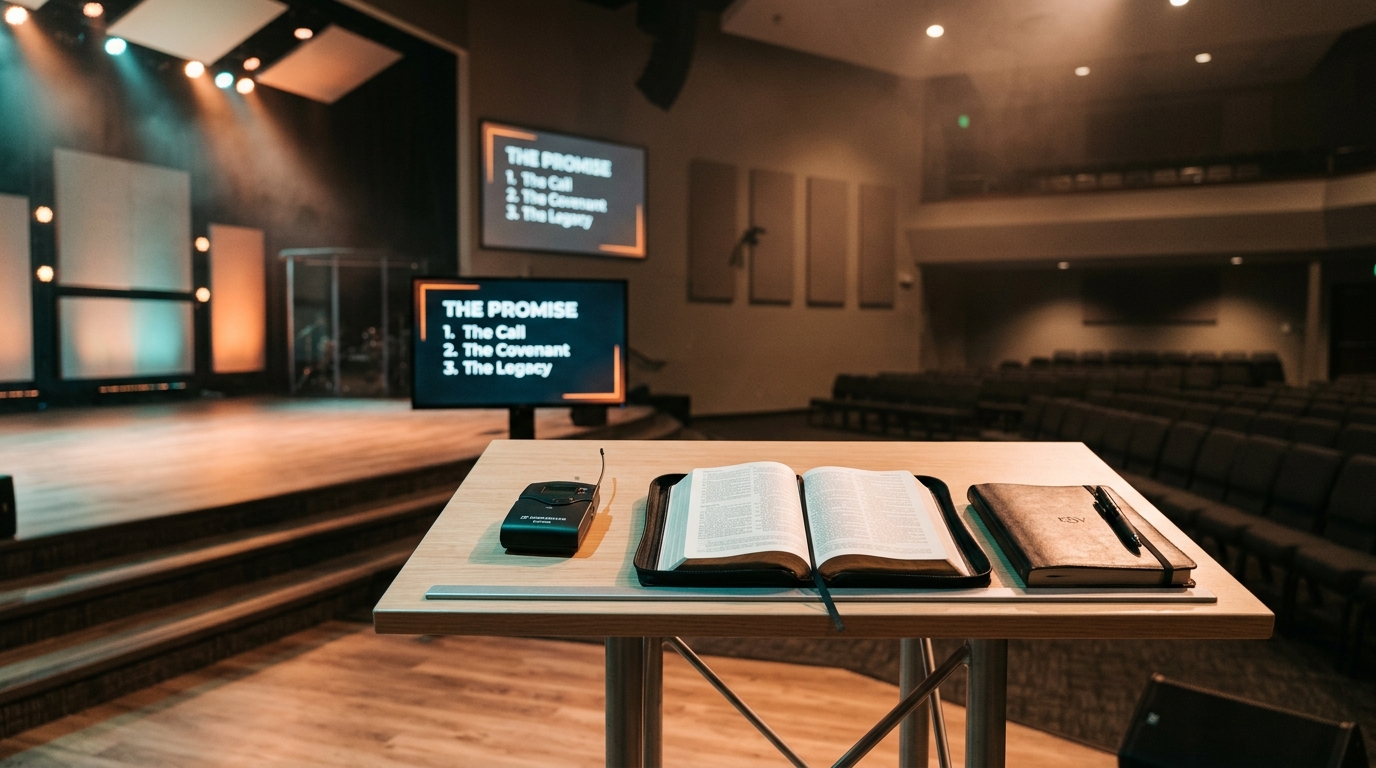
Another effective hybrid is using presentation slides as memory prompts. Your slides display key phrases, images, or Scripture references that guide your teaching without functioning as notes. The congregation sees helpful visual reinforcement while you use the slides to stay on track. This works especially well if you're already using slides for other purposes.
Some pastors use an open Bible as their only reference material. They mark key passages with sticky notes or ribbon markers, and these physical touchpoints anchor their message structure. When they reference Scripture, they're also subtly checking their place in the message flow. This approach maintains the authority of text-centered preaching while enabling note-free delivery.
The manuscript-to-memory transition method involves writing your full manuscript, then progressively reducing your notes over multiple rehearsals. First practice with full notes, then with a detailed outline, then with just main points, and finally with minimal or no reference materials. This gradual reduction builds confidence without forcing an abrupt change.
You might also consider context-specific approaches—preaching note-free for some messages or message types while using notes for others. There's no rule requiring consistency. You might preach without notes for narrative sermons but use detailed notes for expository teaching. The goal is effective communication, not adherence to a single method.
What to Look For When Evaluating Your Note-Free Delivery
If you're developing note-free preaching skills, you need clear evaluation criteria to track your progress and identify areas for improvement. Self-assessment is crucial because, as discussed in why your congregation won't give honest feedback, most church members won't tell you what's not working.
First, evaluate your structural clarity. Did you maintain your planned flow, or did you wander? Did your transitions work smoothly, or did you have awkward pauses while searching for your next point? Recording your sermon and reviewing it later reveals structural issues you might not notice during delivery. Strong note-free preaching maintains tight organization even without written guides.
Assess your eye contact and audience connection. One of the primary benefits of note-free preaching is increased visual engagement with your congregation. Are you actually making meaningful eye contact, or are you staring at a back wall or looking at the ceiling while you think? Effective eye contact in preaching means connecting with different sections of your audience throughout your message.
Evaluate your pacing and energy. Note-free preaching can sometimes lead to rushed delivery as you worry about forgetting content, or to slow, searching delivery as you pause frequently to remember what comes next. Best practices in sermon delivery indicate that your pacing should feel natural and conversational, not hurried or hesitant. If your note-free delivery is significantly faster or slower than your normal teaching pace, you need more preparation.
Pay attention to your filler word usage. When you're teaching without notes, the temptation to fill silence with "um," "uh," or "you know" increases. These verbal crutches multiply when you're searching for your next thought. If you notice increased filler words in your sermons when preaching note-free, it's a sign you need deeper content internalization.
Finally, assess whether your content quality remained consistent. Did you include all your planned illustrations? Did you make your points as clearly as you would have with notes? Did you remember your call to action? Sometimes the cognitive load of note-free delivery causes pastors to drop important content. If you're consistently forgetting key elements, you're either under-prepared or attempting too much content for note-free delivery.
Building Your Note-Free Preaching Skills Over Time
Developing effective note-free preaching ability is a gradual process, not an overnight transformation. Most pastors who successfully transition to note-free delivery do so over 6-12 months of intentional practice.
Start small by preaching a single sermon point without notes while keeping notes available for the rest of your message. This limited experiment reduces pressure while building confidence. Choose a point you know well—perhaps a personal story or a concept you've taught before. Once you successfully deliver one section note-free, expand gradually.
Practice your sermon out loud multiple times before Sunday. According to homiletics research, pastors who rehearse their sermons 3-5 times are significantly more comfortable with note-free delivery than those who rehearse once or not at all. Each rehearsal deepens your content internalization and reveals sections that need clarification or restructuring.
Develop a consistent preparation routine that supports note-free delivery. This might include writing your manuscript early in the week, creating your structural outline mid-week, and spending Thursday and Friday rehearsing. A systematic sermon preparation routine ensures you have adequate time for the deeper preparation note-free preaching requires.
Record yourself during practice sessions and review the recordings critically. Notice where you hesitate, where your structure becomes unclear, and where you rely on filler words or repetitive phrases. This self-evaluation reveals patterns you can address before Sunday. Consider using sermon self-evaluation tools to track your progress systematically.
Study preachers who excel at note-free delivery, but don't try to copy their style. Notice how they structure messages, use repetition for emphasis, and create memorable frameworks. Learn principles you can adapt to your own teaching style rather than imitating their personality or delivery.
Be patient with yourself during the learning process. Your first several attempts at note-free preaching will likely feel awkward and uncomfortable. You'll forget things, lose your place, and question whether it's worth the effort. This is normal. Most pastors report needing 10-15 note-free sermons before the method begins to feel natural.
The Connection Between Note-Free Preaching and the Four Pillars
Note-free preaching intersects significantly with the four pillars of effective sermon delivery—Clarity, Connection, Conviction, and Call to Action. Understanding these connections helps you evaluate whether note-free delivery serves your message well.
For Clarity, note-free preaching can either enhance or undermine your message depending on your preparation. When you've internalized your content deeply, note-free delivery often produces clearer communication because you're explaining concepts naturally rather than reading written sentences. However, insufficient preparation leads to rambling and confusion. The four sermon delivery pillars framework helps you assess whether your note-free delivery is actually serving clarity or working against it.
Connection is where note-free preaching typically shines. Without notes as a barrier, you can maintain consistent eye contact, read your congregation's responses, and adjust your delivery in real time. This presence and responsiveness significantly enhance audience engagement. Studies on audience retention show that speakers who maintain visual connection throughout their presentation achieve 40-60% better message retention than those who frequently reference notes.
Conviction—your authentic belief in your message—can be communicated more powerfully when you're not reading from notes. There's an immediacy and passion that emerges when you're speaking from internalized conviction rather than written manuscript. However, some pastors feel less confident without notes, which can actually undermine their conviction. The method only enhances conviction if you're genuinely comfortable with it.
For Call to Action, note-free delivery enables you to make your appeal with full attention on your congregation. You can watch for response, adjust your language based on what you're seeing, and create a moment of direct invitation without the distraction of checking notes. This can make your closing more powerful—but only if you've prepared your call to action thoroughly enough to deliver it clearly without reference materials.
When Note-Free Preaching Isn't the Right Choice
Despite its benefits, note-free preaching isn't always the best delivery method. Recognizing when to use notes serves your congregation better than dogmatically pursuing note-free delivery in every situation.
Complex expository preaching often benefits from detailed notes or manuscript. When you're working through intricate theological concepts, detailed textual analysis, or multiple cross-references, having your research visible helps ensure accuracy and thoroughness. Some of the most effective expository preachers use detailed notes precisely because their teaching requires precision that's difficult to maintain from memory alone.
If you're preaching in a context where scholarly authority is valued, using notes might actually enhance your credibility rather than diminish it. In some traditional or academic settings, a well-prepared manuscript signals serious engagement with Scripture and theology. Understanding your congregation's expectations matters more than following preaching trends.
When you're addressing controversial or sensitive topics, notes can provide helpful guardrails. They ensure you say what you intended to say, with the nuance and care the topic requires. In these situations, the risk of misspeaking or being misunderstood may outweigh the benefits of note-free delivery.
If you're in a season of life with limited preparation time—perhaps due to family crisis, health issues, or unusual ministry demands—using notes allows you to preach effectively without the additional preparation burden note-free delivery requires. It's better to preach well with notes than to preach poorly without them.
Finally, if attempting note-free preaching creates significant anxiety that interferes with your message delivery, it's not serving your congregation well. Some pastors simply communicate better with notes available. There's no spiritual superiority in note-free preaching—it's a tool, not a measure of faithfulness. Choose the method that enables you to communicate God's Word most effectively in your context.
Frequently Asked Questions
How long does it take to prepare a sermon for note-free delivery? Most pastors spend 15-20 hours preparing a note-free sermon, which is typically 30-40% more time than preparing with a manuscript. This includes initial study and writing (8-10 hours), creating your structural framework (2-3 hours), and rehearsal (5-7 hours across multiple sessions). The time investment decreases as you develop the skill, but note-free preaching always requires substantial preparation.
Do I need to memorize my sermon word-for-word to preach without notes? No. Word-for-word memorization is unnecessary and often counterproductive. Instead, focus on internalizing your message structure, main points, and key transitions. Memorize specific anchor points like statistics, quotes, or your main point statements, but allow the connecting content to emerge naturally during delivery. This approach produces more conversational, authentic teaching than rote memorization.
What should I do if I forget my place during a note-free sermon? Have a recovery strategy prepared before you preach. Many pastors keep a single notecard with their outline as a backup reference. Others use their presentation slides to reorient themselves. If you blank out completely, acknowledge it naturally ("Let me gather my thoughts for a moment"), take a breath, and return to your last clear point. Your congregation will extend grace if you handle the moment with composure rather than panic.
Can I preach without notes if I'm naturally anxious about public speaking? Yes, but the transition requires extra preparation and patience. Many anxious speakers actually find note-free preaching reduces anxiety over time because they're not worried about losing their place in notes or reading awkwardly. However, if note-free delivery increases your anxiety significantly, it may not be the right method for you. Start with hybrid approaches—minimal notes or a single reference card—before attempting completely note-free delivery.
How do I know if my note-free preaching is actually connecting with my congregation? Look for engagement indicators during delivery: sustained eye contact from listeners, responsive body language, and appropriate reactions to your content. After the sermon, notice whether people reference specific points or illustrations—this indicates message retention. Consider using anonymous feedback tools or sermon analysis platforms like Preach Better to get objective assessment of your delivery effectiveness beyond subjective impressions.
Is note-free preaching more effective than preaching with notes? Not necessarily. Effectiveness depends on your preparation quality, teaching style, and context. Research on public speaking suggests that note-free delivery can enhance audience connection and engagement, but only when the speaker is thoroughly prepared and comfortable with the method. Many highly effective preachers use notes or manuscripts. The best delivery method is the one that enables you to communicate your message most clearly and authentically in your specific ministry context.
About Preach Better: Preach Better is a sermon delivery analysis platform that helps pastors get honest, specific feedback on their communication. Built around four pillars—Clarity, Connection, Conviction, and Call to Action—it provides coaching grounded in specific moments from your message, not vague generalities. Whether you're preaching with notes or without them, Preach Better helps you understand what's working and what needs attention in your delivery.
Bottom Line: Choose the Method That Serves Your Message
Note-free preaching is a powerful delivery method that enhances connection and presence when executed well. It requires deeper preparation, strategic memorization of structure (not content), and consistent practice. Most successful note-free preachers spend 15-20 hours preparing and use hybrid approaches that provide backup support without creating dependence on notes.
But note-free delivery isn't universally superior to other methods. It serves some teaching styles, contexts, and message types better than others. The goal isn't to preach without notes—it's to communicate God's Word effectively. Sometimes notes serve that goal better than note-free delivery.
If you're considering the transition to note-free preaching, start small, prepare thoroughly, and evaluate honestly. Record your sermons, assess your delivery against clear criteria, and be patient with the learning process. Whether you ultimately preach note-free, with minimal notes, or with a full manuscript, choose the method that enables you to teach with clarity, connect authentically with your congregation, deliver with conviction, and issue a compelling call to action.
Your congregation doesn't need you to preach without notes—they need you to preach well. Focus on that, and the delivery method will take care of itself.