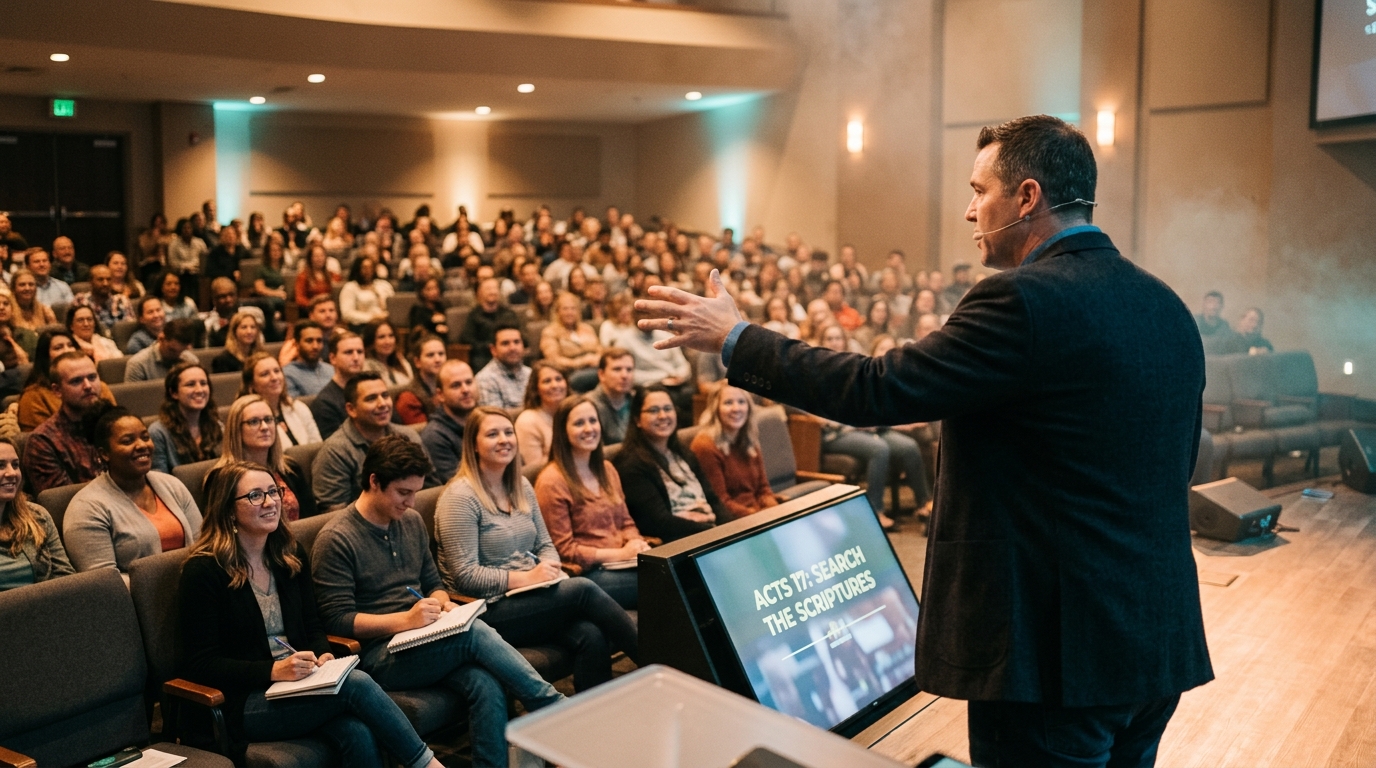
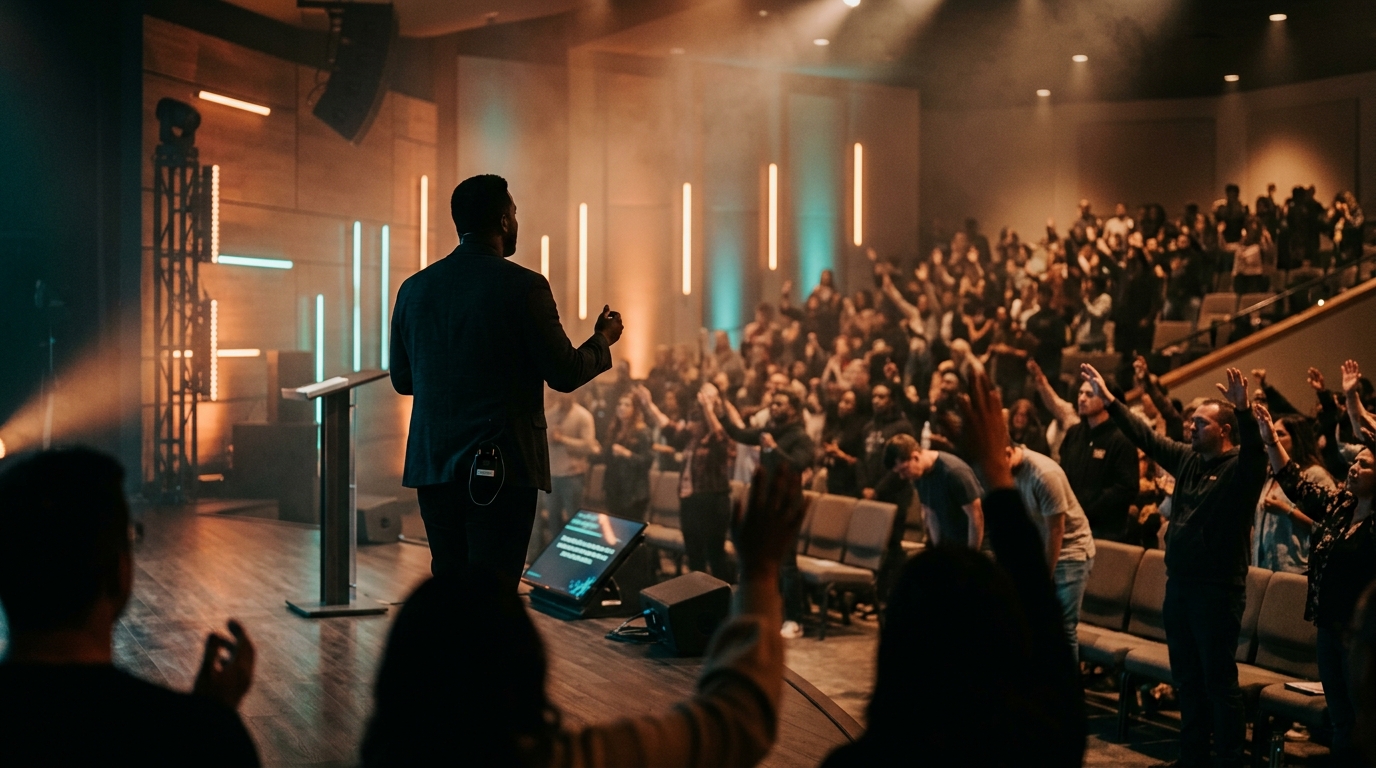
You've seen it work brilliantly in other settings. A preacher asks a question, the congregation responds in unison, and the energy in the room shifts. The message feels alive, participatory, electric. So you try it in your own sermon—and it lands with awkward silence or scattered, half-hearted responses that make you wish you'd just kept preaching.
Sermon call and response can be one of the most powerful tools in interactive preaching, but it's also one of the easiest to misuse. When done well, congregation participation creates moments of collective affirmation that reinforce your message and build momentum. When done poorly, it creates confusion, breaks your flow, and makes people feel manipulated rather than engaged.
The difference isn't about your personality or your congregation's culture. It's about understanding the mechanics of responsive preaching—when to invite participation, how to set it up, and what makes the difference between a moment that energizes your message and one that derails it. In this guide, you'll learn the principles that make sermon call and response effective, the common mistakes that undermine it, and how to evaluate whether it's working in your specific context.
Quick Answer: Effective sermon call and response requires clear setup, natural timing, and strategic placement—typically 2-3 moments per message maximum. The best responsive moments reinforce your central idea rather than fill space, use simple prompts (3-5 words), and follow emotional peaks where congregational agreement is already building. Overuse dilutes impact; silence after a prompt usually means unclear setup, not congregational resistance.
Key Takeaways
- Strategic placement matters more than frequency—2-3 well-timed responsive moments outperform constant interaction that exhausts your congregation
- Setup determines success—the 10 seconds before your prompt (tone, pacing, body language) predict whether people will respond more than the prompt itself
- Silence isn't rejection—when call and response fails, it's usually a mechanics problem (unclear prompt, poor timing, or insufficient setup) rather than a congregational culture issue
- Responsive preaching works best after emotional peaks—invite participation when energy is already high, not to manufacture energy that isn't there
What Makes Sermon Call and Response Effective?
Effective sermon call and response creates a moment of collective affirmation that reinforces your message's central truth. It works when the congregation already feels what you're saying and you give them a structured way to express agreement. The participation isn't creating the energy—it's channeling energy that's already building.
The mechanics are simpler than most pastors realize. Three elements must align: clear setup, natural timing, and simple prompts. Setup means the 10-15 seconds before you ask for a response. You're not just delivering information; you're building anticipation through vocal intensity, strategic pauses, and body language that signals something important is coming. Natural timing means you're inviting response at a moment when people are already leaning in—after a story's climax, following a convicting truth, or when you've just articulated something they've felt but couldn't name. Simple prompts are 3-5 words maximum: "Say amen," "Can I get a witness," "Somebody say yes," or even just a repeated phrase from your message.
When these three elements align, congregation participation feels inevitable rather than forced. People respond because you've created a moment where staying silent would feel unnatural. The response reinforces both the truth you're teaching and the emotional connection between you and the room. This is why sermon call and response works so powerfully in traditions where it's expected—the congregation knows the mechanics, anticipates the moments, and participates without hesitation.
The challenge for pastors outside those traditions isn't that their congregations can't participate. It's that they're trying to import the technique without understanding the setup that makes it work. You can't just drop "Can I get an amen?" into the middle of a theological explanation and expect energy. But you can absolutely use responsive preaching principles to create moments of collective engagement—if you build the runway first.
Why Does Interactive Preaching Connect Deeper Than Monologue?
Interactive preaching connects deeper because it transforms passive listening into active agreement. Communication experts recommend participation not because it's trendy, but because it engages different cognitive processes. When someone speaks a truth aloud—even a simple "amen" or "yes"—they're more likely to remember it and act on it than if they only heard it.
Research on audience retention shows that participation creates memory anchors. The moments when your congregation responds become reference points they return to later. They don't just remember what you said; they remember the moment they agreed with it publicly. This is why responsive moments work best when tied to your sermon's central idea rather than scattered throughout. You're not looking for constant interaction—you're creating 2-3 memorable moments where collective affirmation reinforces your main point.
The deeper connection also comes from shared experience. When a congregation responds together, they're not just agreeing with you—they're agreeing with each other. This creates a sense of unity that monologue alone can't achieve. The message becomes "our truth" rather than "the pastor's teaching." This is particularly powerful when you're addressing challenging topics or calling people to difficult action. Collective response builds collective courage.
But here's the critical nuance: interactive preaching only creates deeper connection when it feels authentic to your message and your delivery style. Forced participation—moments where you're clearly trying to manufacture energy—breaks connection rather than building it. Your congregation can sense when you're using a technique because you think you should versus when you're inviting them into a moment that genuinely matters to you. Authenticity always outperforms technique.
How to Set Up Congregation Participation That Actually Works
Setting up effective congregation participation starts 30-45 seconds before you ask for a response. You're building anticipation through a combination of content, delivery, and energy. The setup has three phases: foundation, build, and invitation.
Foundation phase (30-45 seconds before): You're teaching the truth that will become the responsive moment. Your pacing slows slightly. Your voice gains intensity. You're making eye contact across different sections of the room. The content is clear, memorable, and emotionally resonant—something people can feel, not just understand intellectually. Example: "I need you to hear this. Your past does not define your future. The enemy wants you to believe that who you were is who you'll always be. But God's word says something different."
Build phase (15-20 seconds before): You're increasing vocal intensity and using repetition to drive the point home. Your body language becomes more animated. You might move toward the congregation or use hand gestures that invite participation. You're creating a sense that something important is about to happen. Example: "Every chain is broken. Every debt is paid. Every accusation is answered. Not by your effort—by His finished work."
Invitation phase (the prompt): You give a clear, simple instruction for how to respond. The prompt is 3-5 words, uses active language, and feels like a natural extension of what you've been building. You don't ask permission ("If you believe this...")—you invite action ("Say it with me: I am free"). Your tone is confident, expectant, and warm. You pause 2-3 seconds after the prompt to let people respond. If the setup was strong, the response will be immediate.
The most common mistake pastors make is skipping the foundation and build phases. They deliver information, then suddenly ask for participation without creating the emotional runway. It's like asking someone to jump when they haven't seen you wind up. The congregation doesn't know a responsive moment is coming, so they're not prepared to engage. Strong setup eliminates that confusion.
Another critical element: match your prompt to your congregation's comfort level. If responsive preaching is new to your context, start with lower-risk prompts: "Turn to someone near you and say..." or "If you believe this, let me see your hands." These create participation without requiring verbal response from the whole room. As your congregation becomes more comfortable, you can introduce corporate verbal responses. But you're always reading the room and adjusting your approach based on what's working.
Common Sermon Call and Response Mistakes (and How to Fix Them)
The most damaging mistake is overuse. When you ask for congregation participation every few minutes, you train people to tune out the prompts. Each responsive moment should feel significant—a peak in your message, not a routine interruption. Best practices in sermon delivery indicate 2-3 responsive moments maximum per message. More than that, and you're diluting impact rather than building it.
Mistake two: unclear prompts. "Can I get an amen?" works in contexts where that language is familiar. In other settings, it feels foreign and creates hesitation. Your prompt needs to match your congregation's vocabulary and comfort level. Instead of borrowed phrases, use language that fits your natural delivery: "If that's true for you, say yes," "Let me hear you say it: God is faithful," or even just repeating a key phrase with expectation in your voice. Clarity eliminates confusion.
Mistake three: asking for response when energy is low. Sermon call and response doesn't create energy—it channels energy that's already present. If you're in the middle of a complex explanation or your congregation is still processing a difficult truth, they're not ready to respond. Wait for moments when emotional agreement is already building: after a powerful story, following a convicting application, or when you've just articulated a truth that resonates deeply. The response should feel like a release of energy that's already there, not an attempt to manufacture energy from nothing.
Mistake four: reacting poorly to silence. When a prompt doesn't get the response you expected, most pastors either repeat it (which feels desperate) or make a joke about it (which creates awkwardness). Better approach: acknowledge it briefly and move on. "I'll take that as a quiet amen" or "Let me say it for both of us then" keeps the moment from becoming a distraction. Then evaluate later: Was the setup unclear? Was the timing off? Was the prompt too complex? Learn from what didn't work rather than forcing it in the moment.
Mistake five: using participation as a crutch for weak content. If your message lacks clarity or conviction, adding interactive elements won't fix it. Responsive preaching works when you have something worth responding to. If you find yourself relying on call and response to create energy your content isn't generating, the problem isn't your technique—it's your preparation. Strengthen your message first, then add participation strategically.
The fix for all these mistakes is the same: evaluate your use of congregation participation with the same rigor you apply to your content. After each sermon, ask: Did the responsive moments reinforce my central idea? Did they feel natural or forced? Did the congregation engage genuinely or out of obligation? Did I use participation strategically or habitually? Honest evaluation reveals patterns that help you improve.
5 Types of Responsive Moments That Work in Any Context
Corporate declaration works when you want the congregation to speak a truth aloud together. Setup: You teach the truth clearly, build emotional intensity, then give a simple phrase to repeat. Example: "I want you to say this with me—not just hear it, but declare it. Say: My God is able." This works best with short, powerful statements (4-6 words) that capture your sermon's central truth. The act of speaking together creates both individual commitment and collective unity.
Affirmation prompts invite agreement without requiring verbal response. Setup: You make a statement, then pause and ask for a physical response. Example: "If you've ever felt like giving up, let me see your hands... Now keep them up if you're still here, still fighting, still trusting." This creates participation without the vulnerability of speaking aloud. It works particularly well early in a message when you're building trust and connection.
Call-back phrases use repetition throughout your message to create anticipated responses. Setup: You introduce a phrase early, repeat it at key moments, and eventually the congregation joins you without prompting. Example: Throughout a message on God's faithfulness, you return to "He's never failed me yet" at transition points. By the third or fourth use, people are saying it with you. This builds momentum and makes your central idea unforgettable.
Partner interaction shifts participation from pastor-to-congregation to person-to-person. Setup: You give clear instructions for a brief exchange with someone nearby. Example: "Turn to someone next to you and tell them: You're not alone in this." This lowers the risk of public response while still creating engagement. It works especially well when you're addressing personal struggles or calling for mutual encouragement.
Responsive reading uses Scripture or key statements in a back-and-forth format. Setup: You read a line, the congregation responds with a prepared phrase (printed in bulletin or on screen). Example: You: "When I am afraid..." Congregation: "I will trust in You." This works best when the responsive phrase is simple, repeated, and emotionally resonant. It combines the power of Scripture with the engagement of participation.
Each of these types serves a different purpose and fits different moments in your message. The key is matching the type of response to your sermon's content and your congregation's readiness. Don't force a corporate declaration if your people aren't there yet. Start with affirmation prompts or partner interaction, then build toward more vulnerable forms of participation as trust grows.
What to Look for When Evaluating Your Use of Interactive Preaching
The primary evaluation question is simple: Did the responsive moments reinforce your central idea or distract from it? If you can remove the participation without weakening your message, you're using it as filler rather than reinforcement. Effective congregation participation should be so integrated with your content that removing it would leave a gap. If the responsive moments feel like add-ons, they probably are.
Second question: Did people respond genuinely or out of obligation? You can feel the difference. Genuine response has energy—voices are strong, timing is immediate, body language is engaged. Obligatory response feels hesitant, scattered, half-hearted. If you're consistently getting obligatory responses, something in your setup isn't working. Either the prompts don't match your congregation's comfort level, the timing is off, or you're asking for participation too frequently.
Third question: Did the responsive moments build momentum or break it? Studies on audience retention show that participation should enhance flow, not interrupt it. If you notice energy dropping after a responsive moment, you've likely misjudged the timing or asked for response when people weren't ready. Effective interactive preaching creates peaks that carry into the next section of your message. The response should feel like a launching point, not a stopping point.
Fourth question: Are you reading the room and adjusting in real time? The best practitioners of sermon call and response don't follow a script—they respond to what's happening in the moment. If a prompt isn't landing, they move on quickly. If the congregation is more engaged than expected, they might add an unplanned responsive moment. This requires presence and flexibility. You can't be so locked into your plan that you miss what's actually happening.
Fifth question: Is your use of participation growing more natural over time? Like any communication skill, responsive preaching improves with practice and evaluation. If you've been trying congregation participation for months and it still feels forced, you're either not evaluating honestly or not adjusting based on what you learn. Track what works: which types of prompts get the strongest response, which moments in your message structure are most effective, which setup techniques create the best engagement. Then do more of what works and less of what doesn't.
The evaluation process itself can be enhanced by tools like Preach Better, which analyzes your sermon delivery and identifies patterns in how your congregation engages. When you can see data on which moments generated the strongest response and which fell flat, you make better decisions about when and how to invite participation. The goal isn't to manufacture engagement—it's to recognize and amplify the moments when your congregation is already ready to respond.
When Sermon Call and Response Doesn't Fit Your Context (And What to Use Instead)
Not every congregation is wired for verbal call and response, and that's completely fine. Some church cultures value contemplative silence over vocal participation. Some congregations are still building trust with a new pastor and aren't ready for that level of interaction. Some messages address topics so heavy that asking for verbal response would feel inappropriate. Knowing when not to use sermon call and response is as important as knowing how to use it well.
If verbal participation doesn't fit your context, you have other options for creating engagement. Strategic pauses invite internal response without requiring external expression. After making a convicting point, you pause 4-5 seconds and let people process. The silence creates space for personal reflection that can be more powerful than corporate response. You can learn more about this technique in our guide on strategic pauses in preaching.
Rhetorical questions create interaction without requiring answers. You ask a question, pause briefly, then continue—but the pause gives people time to answer internally. Example: "What would change in your life if you really believed God's promises?" Pause. "What fear would you face? What risk would you take?" This engages the congregation's thinking without asking them to speak aloud.
Visual participation uses physical actions instead of verbal responses. Asking people to bow their heads, raise their hands, stand, or close their eyes creates engagement without the vulnerability of speaking. This works particularly well in contexts where verbal response feels foreign but people are willing to participate physically.
Written response invites people to journal, fill out a card, or write a prayer during or after the message. This creates personal engagement that doesn't require public expression. It's especially effective when you're addressing sensitive topics or calling for specific commitments.
The key is understanding that congregation participation isn't about getting people to say something—it's about creating moments where they engage actively rather than passively. Verbal call and response is one tool for that engagement, but it's not the only tool. Choose the approach that fits your congregation's culture, your message's content, and your natural delivery style. Authenticity always outperforms borrowed techniques that don't fit who you are.
How to Introduce Interactive Preaching to a Traditional Congregation
Introducing responsive preaching to a congregation unfamiliar with it requires patience, clear communication, and gradual progression. You're not just teaching a new technique—you're shifting expectations about what participation looks like during a sermon. The process typically takes 6-12 months of consistent, strategic implementation.
Start with the lowest-risk forms of participation: affirmation prompts ("If you've experienced this, let me see your hands") or partner interaction ("Tell someone near you..."). These create engagement without requiring the whole congregation to speak aloud together. Use these 1-2 times per message for several weeks. Your goal is to normalize the idea that sermons can include moments of active response.
Once affirmation prompts feel natural, introduce simple verbal responses—but frame them clearly. Example: "I'm going to say something, and I want you to say it with me. Ready?" The explicit instruction removes confusion about what you're asking for. Keep the phrase short (3-5 words) and emotionally resonant. After people respond, acknowledge it briefly: "Thank you" or "That's right." This positive reinforcement encourages future participation.
Gradually increase frequency and complexity over months, not weeks. You're building a new muscle, and muscles grow through consistent, progressive training. If you jump too quickly to frequent call and response, you'll create fatigue rather than engagement. Better to use participation sparingly and effectively than to overuse it and train people to tune out.
Address resistance directly when you encounter it. Some people will be uncomfortable with interactive preaching because it's unfamiliar. Rather than ignoring their discomfort, name it: "I know this might feel different if you're not used to it. But I believe there's power in speaking truth together, not just hearing it." This acknowledges the change while explaining the purpose behind it.
Evaluate constantly. Pay attention to which types of participation get the strongest response and which create hesitation. Adjust your approach based on what you learn. If verbal responses aren't working yet, stay with physical participation longer. If certain prompts consistently fall flat, try different language. The goal isn't to force your congregation into a predetermined mold—it's to find the forms of participation that fit your specific context.
Remember that some congregations will never embrace frequent call and response, and that's okay. Your job isn't to make them into something they're not. It's to find the right balance of participation and teaching that serves your message and honors your congregation's culture. Sometimes that means using responsive preaching sparingly. Sometimes it means focusing on other congregation engagement strategies that fit better. Wisdom is knowing the difference.
About Preach Better: Preach Better is a sermon delivery analysis platform that helps pastors get honest, specific feedback on their communication. Built around four pillars—Clarity, Connection, Conviction, and Call to Action—it provides coaching grounded in specific moments from your message, not vague generalities. For pastors exploring interactive preaching techniques, Preach Better's analysis can identify which responsive moments generated the strongest engagement and which timing or setup issues might be undermining your congregation participation.
Frequently Asked Questions
How often should I use call and response in a sermon? Limit sermon call and response to 2-3 strategic moments per message maximum. More frequent use trains your congregation to tune out the prompts rather than engage with them. Each responsive moment should reinforce your central idea at a peak point in your message—after an emotional story, following a convicting truth, or when articulating something deeply resonant. Quality and placement matter far more than quantity.
What do I do when nobody responds to my prompt? When a call and response prompt gets silence, acknowledge it briefly without making it awkward: "I'll take that as a quiet amen" or "Let me say it for us." Then move forward and evaluate later whether the setup was unclear, the timing was off, or the prompt was too complex. Silence usually indicates a mechanics problem, not congregational resistance. Adjust your approach for the next responsive moment rather than forcing the current one.
Can interactive preaching work in small congregations? Yes, but the dynamics differ from larger settings. In congregations under 50 people, verbal call and response can feel more vulnerable because individual voices are more identifiable. Start with partner interaction ("Turn to someone and say...") or written responses rather than corporate verbal prompts. As trust builds, you can introduce simple affirmation prompts. Small groups often respond better to conversational interaction than formal responsive techniques.
How do I know if my congregation is ready for more participation? Your congregation is ready for increased participation when current responsive moments get immediate, energetic responses without hesitation. Watch for body language cues: people leaning forward, nodding, making eye contact with you during setup. If affirmation prompts (hand-raising) get strong participation, try simple verbal responses. If verbal responses feel natural, introduce corporate declarations. Let each level of comfort inform the next step rather than forcing progression on a timeline.
Should I print responsive phrases in the bulletin or put them on screen? For planned responsive readings or repeated phrases, visual support helps—especially when introducing interactive preaching to unfamiliar congregations. But for spontaneous call and response moments, visual aids can undermine authenticity and break the emotional connection you're building. Use printed or projected prompts for structured liturgical responses, but keep spontaneous responsive moments verbal and immediate. The goal is participation that feels natural, not scripted.
What's the difference between call and response and just asking rhetorical questions? Call and response invites explicit action—speaking, raising hands, or physical movement. Rhetorical questions invite internal reflection without requiring external response. Both create engagement, but call and response builds collective energy and public commitment while rhetorical questions foster personal processing. Use call and response when you want shared affirmation of a truth; use rhetorical questions when you want individual conviction or reflection. Both have value in different moments of your message.
Bottom Line: Make Participation Serve Your Message, Not Replace It
Effective sermon call and response isn't about getting your congregation to say something—it's about creating moments where speaking a truth together reinforces the message you're teaching. The best interactive preaching happens when you've built such strong content and emotional connection that participation feels inevitable, not forced. Setup matters more than the prompt itself. Timing determines whether people are ready to respond. And strategic restraint—using participation sparingly and purposefully—creates more impact than constant interaction.
If you've been hesitant to try congregation participation because you're not sure it fits your style, start small. One affirmation prompt in your next message. One partner interaction moment. One simple phrase you invite people to say with you. Evaluate what works, adjust what doesn't, and build from there. You don't need to transform your entire delivery approach overnight. You just need to find the forms of participation that fit your message, your congregation, and your authentic voice.
And if you want specific feedback on which responsive moments are working and which aren't, Preach Better can help you see patterns you might miss in the moment—so every message gets stronger, more connected, and more effective at moving people from hearing to doing.