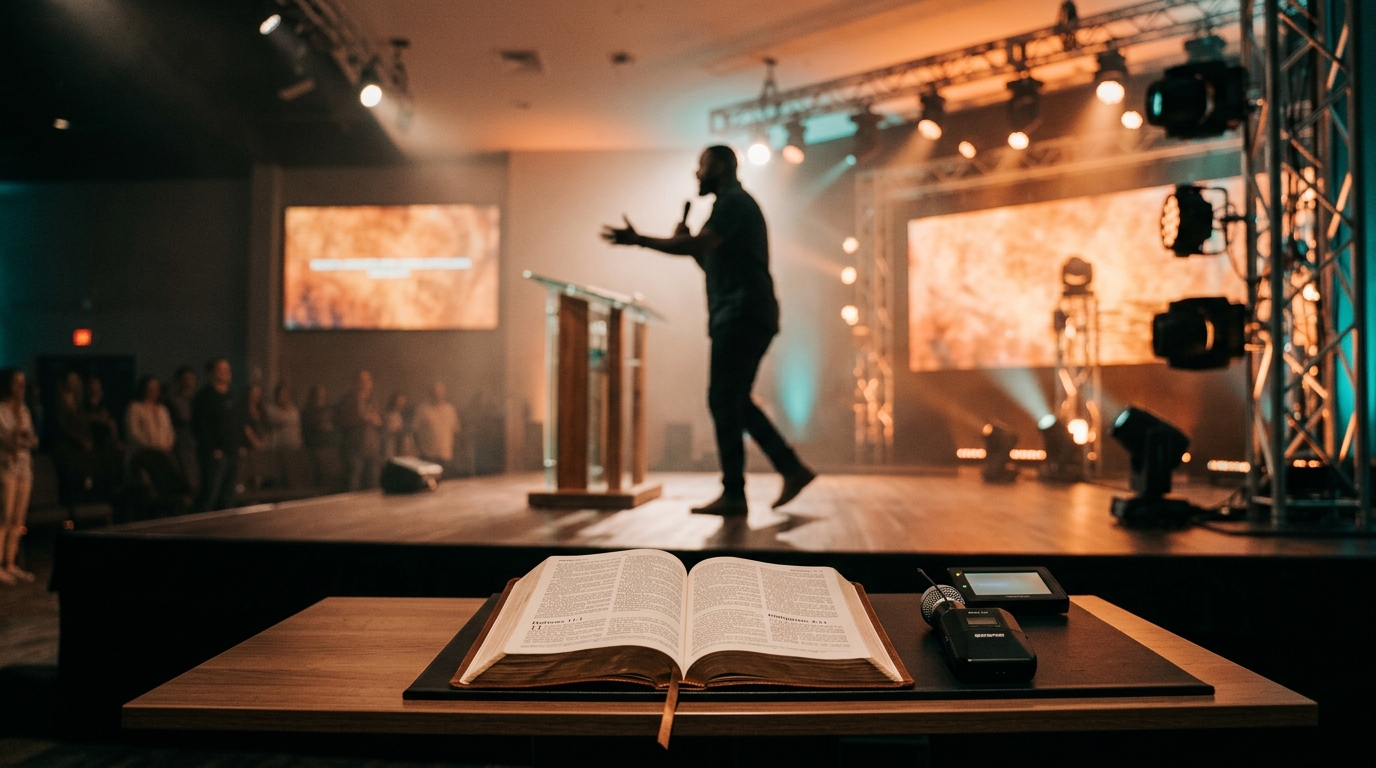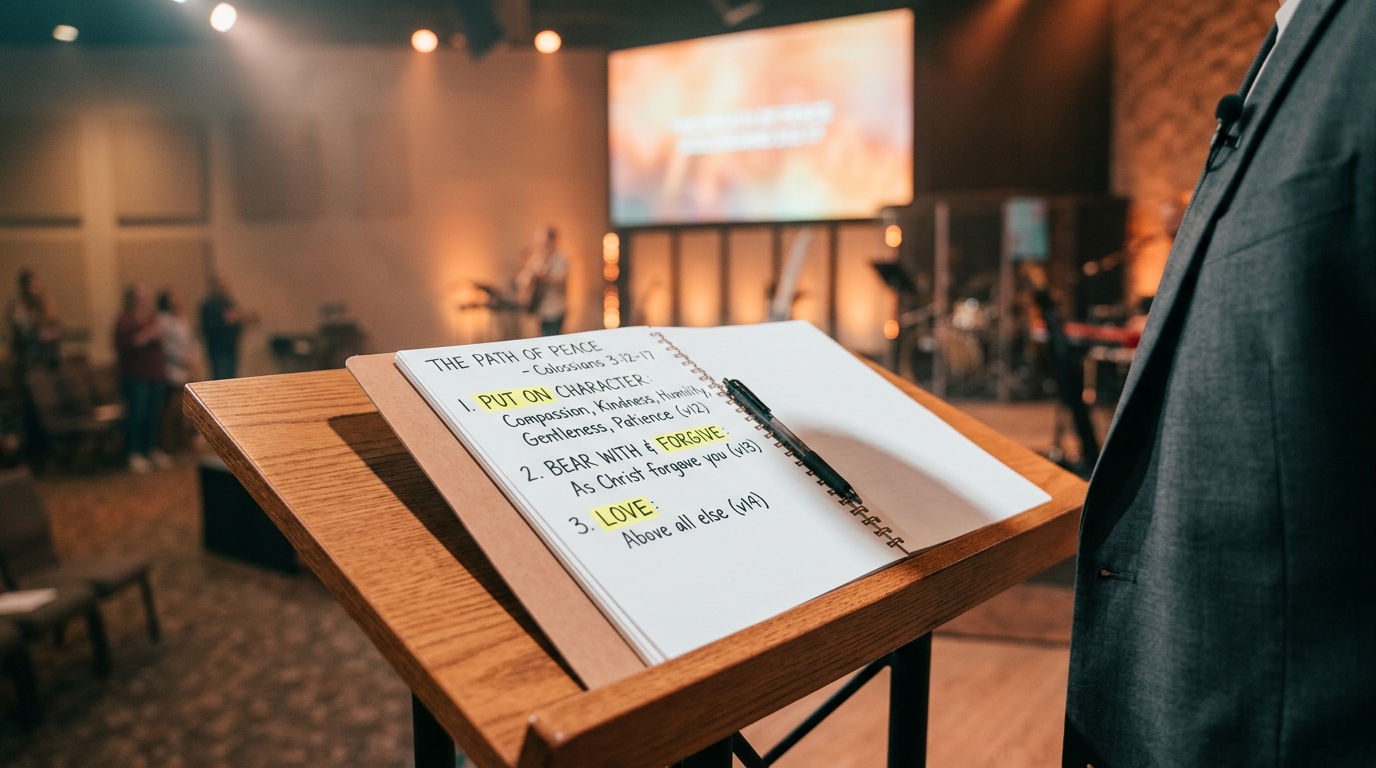
You're standing in front of your congregation for the third Sunday in a row, and something feels off. Your sermon content is solid. Your theology is sound. But you can feel the disconnect—people are checking their phones, shifting in their seats, and you're not sure why. The problem might not be your message. It might be your preaching stage presence.
Stage presence isn't about theatrics or putting on a show. It's about the physical and emotional authority you bring to the moment when you deliver God's word. It's the difference between a pastor who holds attention naturally and one who constantly fights for it. For new pastors especially, developing authentic pulpit presence can feel like walking a tightrope—too much and you're performing, too little and you're invisible.
Preach Better helps pastors identify exactly where their delivery needs work, providing specific feedback on everything from body language to vocal dynamics. But understanding what stage presence actually means—and how to develop it without losing your authenticity—starts with recognizing that presence isn't something you fake. It's something you build.
This guide will show you how to develop commanding preaching stage presence that feels natural, connects with your congregation, and serves your message instead of distracting from it.
Quick Answer: Preaching stage presence is the combination of physical positioning, vocal confidence, intentional movement, and emotional authenticity that allows a pastor to command attention without performing. Effective stage presence requires owning your space (standing centered, using the full platform), maintaining consistent eye contact across all sections, eliminating nervous habits, and matching your physical energy to your message's emotional arc. Most new pastors can improve presence by 40-60% within 8-10 sermons by focusing on three areas: deliberate movement patterns, confident vocal projection, and eliminating self-protective body language.
Key Takeaways
- Stage presence is about authority, not performance—it's the physical and vocal confidence that allows your message to land without distraction
- Your body communicates before your words do—congregation members form impressions about your confidence and credibility within the first 30 seconds based on how you carry yourself
- Movement must be intentional, not nervous—purposeful stage movement reinforces your points, while pacing or swaying signals anxiety and undermines your message
- Authentic presence beats polished performance—congregations connect with pastors who own their space naturally, not those who mimic someone else's style
What Is Preaching Stage Presence (And Why It's Not What You Think)
Preaching stage presence is the physical, vocal, and emotional authority you project when delivering a sermon. It's not about charisma or entertainment value—it's about commanding attention in a way that serves your message and honors your congregation's time. When pastors have strong stage presence, congregations lean in. When they don't, people drift.
The confusion comes from associating presence with performance. New pastors often think they need to "be more dynamic" or "bring more energy," which leads to forced gestures, artificial enthusiasm, and a delivery style that feels inauthentic. Real stage presence isn't about being louder or more animated. It's about being fully present—physically grounded, vocally confident, and emotionally available.
Communication experts recommend thinking of stage presence as the intersection of three elements: physical positioning (where you stand and how you move), vocal delivery (projection, pacing, and tone), and emotional authenticity (your genuine connection to the material). When all three align, you create what researchers call "embodied authority"—the sense that you belong in that space, delivering that message, to that audience.
Here's what stage presence is NOT: mimicking your favorite preacher's style, using dramatic pauses you don't feel, or adopting hand gestures that aren't natural to you. Those tactics create distance between you and your congregation because people can sense inauthenticity. Strong presence comes from owning your own delivery style while eliminating the habits that undermine it.
Why New Pastors Struggle with Pulpit Presence (And What's Actually Happening)
Most new pastors struggle with stage presence because they're focused on the wrong things. You're thinking about your notes, your transitions, whether you'll remember that illustration. Meanwhile, your body is broadcasting anxiety signals your congregation reads instantly: locked knees, crossed arms, constant movement, minimal eye contact.
Studies on audience retention show that listeners form judgments about a speaker's credibility within 7-10 seconds—before you've said anything substantive. Those judgments are based almost entirely on non-verbal cues: posture, facial expression, vocal tone, and how you occupy space. If your body language signals uncertainty, your congregation unconsciously questions your authority to speak on the topic, even if your content is excellent.
The most common stage presence problems for new pastors:
Defensive body language. Crossing arms, gripping the pulpit, keeping hands in pockets, or standing with weight on one hip. These positions signal self-protection and create a barrier between you and your audience.
Aimless movement. Pacing back and forth without purpose, swaying side to side, or shifting weight constantly. This movement distracts from your message and signals nervousness rather than confidence.
Inconsistent eye contact. Looking at notes too frequently, scanning over heads instead of making direct contact, or favoring one section of the room. This breaks connection and makes your message feel less personal.
Vocal inconsistency. Starting strong but fading as the sermon progresses, speaking in a monotone that doesn't match the content's emotional weight, or dropping volume at the end of sentences.
Spatial timidity. Staying rooted in one spot (usually behind the pulpit), not using the full stage, or retreating to the edges. This makes you physically smaller and reduces your visual impact.
The good news: these are all fixable habits, not personality flaws. Most pastors see dramatic improvement in stage presence within two months of focused practice because these issues stem from anxiety and inexperience, not lack of ability.
How to Develop Authentic Preaching Confidence in Four Stages
Building genuine stage presence happens in layers. You can't fix everything at once, and trying to will make you more self-conscious, not less. Instead, focus on one element at a time until it becomes automatic, then add the next layer.
Stage 1: Own Your Physical Space
Before you work on anything else, you need to feel comfortable occupying the platform. This starts with your stance. Stand with feet shoulder-width apart, weight evenly distributed, knees slightly bent (not locked). This position is physically stable and projects confidence. Practice this stance until it feels natural—at home, during rehearsal, anywhere.
Next, claim the full stage. If you have a 12-foot platform, use all 12 feet. Walk from one side to the other with purpose (not pacing). Move forward toward the congregation during key moments. Step back during transitions. Each movement should have a reason—emphasizing a point, shifting topics, inviting reflection.
Eliminate nervous habits. Record yourself preaching and watch for repetitive movements: hand-wringing, pocket-checking, hair-touching, pulpit-gripping. Choose one habit to eliminate per sermon cycle. Don't try to fix them all simultaneously.
Stage 2: Master Intentional Eye Contact
Eye contact is the most powerful tool for building connection, but most new pastors do it wrong. They scan the room in a sweeping motion that makes real contact with no one, or they fixate on friendly faces and ignore entire sections.
Instead, practice "zone engagement." Divide your congregation into 6-8 zones (front left, front center, front right, middle left, etc.). During each major point or illustration, make direct eye contact with someone in a different zone. Hold that contact for 3-5 seconds—long enough to feel like a real connection, not a glance. Then move to another zone.
This technique ensures you're engaging the entire room and creates the feeling that you're speaking to individuals, not a crowd. It also forces you to look up from your notes more frequently, which improves your overall presence.
Stage 3: Align Your Vocal Energy with Your Message
Your voice is an instrument, and stage presence requires playing it with intention. This doesn't mean being loud or dramatic—it means matching your vocal delivery to your content's emotional weight.
According to homiletics research, vocal variety is one of the top three factors in sermon memorability. Monotone delivery—even of excellent content—fails to engage because it signals that the speaker isn't emotionally invested in the material.
Practice vocal dynamics: volume changes (louder for emphasis, softer for intimacy), pacing shifts (faster for urgency, slower for weight), and strategic pauses (silence before key points). These tools create rhythm and prevent your delivery from flattening.
One practical exercise: read your sermon manuscript aloud and mark moments that should have vocal shifts. During delivery, honor those marks. Over time, this becomes intuitive rather than mechanical.
Stage 4: Build Emotional Authenticity
The final layer of stage presence is the hardest to teach because it's the most personal: being emotionally present with your material. This means allowing yourself to feel the weight of what you're saying—grief during lament, joy during celebration, urgency during challenge.
Congregations connect with pastors who are visibly moved by their own message. Not manufactured emotion, but genuine response. If you're preaching about God's faithfulness and you're not feeling gratitude yourself, your congregation won't either. If you're calling people to repentance without conviction in your own voice, the call falls flat.
This doesn't mean being emotionally raw every week. It means being present. Let your face reflect what you're saying. Let your voice carry the weight of the moment. Let your body language match the content—open and inviting during grace, firm and grounded during challenge.
Authenticity can't be faked, but it can be cultivated. Spend time with your sermon content before Sunday. Pray through it. Let it affect you first. Then bring that genuine response to the pulpit.
Common Stage Presence Mistakes (And How to Fix Them)
Even experienced pastors fall into stage presence traps that undermine their effectiveness. Here are the most common mistakes and their solutions.
Mistake 1: Hiding Behind the Pulpit
Many pastors treat the pulpit like a shield—standing behind it for the entire sermon, gripping its edges, using it as a physical barrier. This creates distance between you and your congregation and makes you appear less confident, not more.
Fix: Use the pulpit as a home base, not a fortress. Step out from behind it during illustrations, key points, or application. Return to it during transitions or when referencing notes. This movement creates visual variety and signals confidence.
Mistake 2: Apologizing with Your Body
Some pastors unconsciously signal apology or uncertainty through their body language: hunched shoulders, hands clasped in front (the "fig leaf" position), or a tilted head. These positions communicate submission, not authority.
Fix: Practice "open" body language. Shoulders back, chest open, hands at your sides or gesturing naturally. Stand as if you have every right to be in that space—because you do. You're not asking permission to preach; you're stewarding a calling.
Mistake 3: Performing Someone Else's Style
New pastors often try to emulate preachers they admire—copying their cadence, gestures, or vocal patterns. This always feels forced because it's not organically yours.
Fix: Study effective communicators to learn principles, not to copy tactics. Notice what works (intentional pauses, purposeful movement, vocal variety) and adapt those principles to your natural style. Your congregation needs your authentic voice, not a second-rate version of someone else's.
Mistake 4: Ignoring the Back Half of the Room
Most pastors naturally favor the front rows—they're easier to see, they provide visual feedback, and they feel safer. But this leaves the back half of your congregation feeling invisible.
Fix: Deliberately engage the back rows. Make eye contact with people in the last few rows during every major point. Occasionally move toward the back of the platform. Use vocal projection that reaches the entire room, not just the front third.
Mistake 5: Treating Stage Presence as Separate from Content
Some pastors think of delivery as something added on top of content—a performance layer. This creates a disconnect where your body and voice aren't serving your message.
Fix: Integrate presence into your preparation. As you write your sermon, note where movement would emphasize a point, where a pause would create weight, where vocal intensity should increase. Your delivery should be an extension of your content, not a separate skill.
What to Practice First: A 30-Day Stage Presence Development Plan
You can't improve everything simultaneously. Here's a focused 30-day plan that builds stage presence systematically.
Week 1: Physical Grounding
- Focus: Stance and spatial ownership
- Practice: Stand in your confident stance (feet shoulder-width, weight even) for 2 minutes daily
- Sunday goal: Maintain grounded stance for entire sermon, use full platform width at least 3 times
Week 2: Eye Contact Zones
- Focus: Engaging all sections of the room
- Practice: Divide your sanctuary into zones, plan which zone to engage during each sermon section
- Sunday goal: Make direct eye contact with someone in each zone at least once
Week 3: Vocal Dynamics
- Focus: Volume and pacing variation
- Practice: Read your sermon aloud, marking 5 places for volume shifts and 5 for pacing changes
- Sunday goal: Execute all marked vocal shifts during delivery
Week 4: Eliminating Nervous Habits
- Focus: Removing one distracting behavior
- Practice: Record yourself and identify your primary nervous habit (pacing, hand-wringing, etc.)
- Sunday goal: Reduce that habit by 50% (you won't eliminate it completely yet—that's okay)
After 30 days, you'll have a foundation. From there, continue cycling through these elements, adding layers like gesture intentionality, emotional authenticity, and advanced movement patterns.
How Preach Better Helps You Identify Stage Presence Gaps
Stage presence is hard to self-diagnose because you can't see yourself while preaching. You might feel nervous but not realize you're pacing. You might think you're making eye contact but actually scanning over heads. This is where objective feedback becomes essential.
About Preach Better: Preach Better is a sermon delivery analysis platform that helps pastors get honest, specific feedback on their communication. Built around four pillars—Clarity, Connection, Conviction, and Call to Action—it provides coaching grounded in specific moments from your message, not vague generalities. For stage presence specifically, Preach Better identifies patterns in your body language, movement, and vocal delivery that you can't catch on your own.
The platform analyzes your sermon audio and transcript to flag delivery issues tied to specific moments: "At 8:32, your pacing accelerated during the transition, which made the shift feel rushed rather than intentional." This specificity allows you to see exactly where your stage presence breaks down and practice those moments differently.
For new pastors especially, this feedback is invaluable because it separates what you feel ("I think I'm too stiff") from what's actually happening ("Your movement is fine, but you're dropping eye contact during illustrations"). It also tracks improvement over time, showing you which adjustments are working and which need more attention.
The Bottom Line: Stage Presence Serves Your Message
Strong preaching stage presence isn't about being the most dynamic person in the room. It's about removing the barriers—nervous habits, defensive body language, vocal inconsistency—that prevent your message from landing with full impact. When you own your space, maintain genuine connection, and match your physical delivery to your content's emotional weight, your congregation can focus on what you're saying instead of how you're saying it.
For new pastors, developing authentic pulpit presence takes time. You won't master it in a month or even six months. But with focused practice on the fundamentals—grounded stance, intentional movement, consistent eye contact, vocal variety—you'll see measurable improvement within weeks. And that improvement compounds. Each sermon builds confidence, which improves presence, which deepens connection, which builds more confidence.
The pastors who develop the strongest stage presence aren't the naturally gifted communicators. They're the ones who commit to honest self-evaluation, practice specific skills systematically, and refuse to settle for delivery that doesn't serve their message well. Start with one element this week. Master it. Then add the next.
Because when your stage presence aligns with your message, your congregation doesn't just hear the truth—they feel it. And that's when transformation happens.
Frequently Asked Questions
What is the difference between stage presence and charisma in preaching? Stage presence is the physical and vocal authority you bring to sermon delivery—how you occupy space, maintain eye contact, and project confidence. Charisma is a personality trait involving natural charm and likability. You can have strong stage presence without being charismatic by mastering technical skills like intentional movement, vocal variety, and grounded body language. Stage presence is learnable; charisma is innate but not required for effective preaching.
How long does it take to develop confident pulpit presence as a new pastor? Most new pastors see noticeable improvement in stage presence within 8-12 weeks of focused practice, with significant confidence gains by the 6-month mark. Research on public speaking suggests that consistent weekly delivery combined with specific feedback can improve presence indicators (eye contact, movement patterns, vocal projection) by 40-60% within 10-15 sermons. Full mastery typically takes 2-3 years of regular preaching.
Can introverted pastors develop strong stage presence? Yes. Stage presence doesn't require extroversion—it requires intentionality. Introverted pastors often develop excellent stage presence because they're naturally more thoughtful about their delivery choices. Focus on technical elements like deliberate movement, consistent eye contact zones, and vocal projection rather than trying to "be more outgoing." Many highly effective preachers with commanding presence are introverts who've mastered these skills.
What should I do if I feel like I'm performing rather than preaching? The feeling of performing usually comes from adopting delivery techniques that aren't natural to you or trying to mimic another preacher's style. Return to authenticity by focusing on being present with your content rather than executing techniques. Let your body language and vocal delivery flow from genuine emotional connection to your message. Strong stage presence should feel like an amplified version of your natural communication style, not a character you're playing.
How can I improve my stage presence without watching myself on video? While video review is the most effective tool, you can improve through audio analysis (listening for vocal patterns, pacing, and filler words), trusted observer feedback (ask someone to note specific behaviors like eye contact or movement), and kinesthetic awareness (paying attention to your body during delivery—are you tense, grounded, moving with purpose?). However, most pastors benefit significantly from watching at least one full sermon quarterly to identify blind spots.
Should I move around the stage during every sermon or stay in one place? Movement should be purposeful, not constant. Best practices in sermon delivery indicate that effective stage presence includes both stillness and movement—stillness during moments requiring weight or reflection, movement during transitions or when building energy. Aim for 3-5 intentional position changes during a 30-minute sermon, using the full platform width. Constant pacing distracts; strategic movement reinforces your message structure and maintains visual interest.