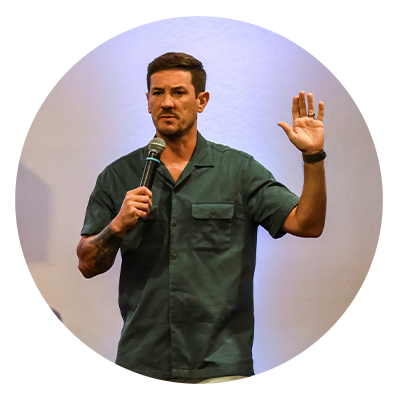

You've spent three years learning Greek verb tenses, theological frameworks, and exegetical methods. You can parse a sentence in Romans and trace redemptive history through the Old Testament. But when you step behind the pulpit for the first time as a lead pastor, you realize something unsettling: seminary prepared you to write sermons, not necessarily to deliver them.
The gap between seminary preaching practice and real pulpit ministry is wider than most students expect. Homiletics classes focus heavily on content development—structure, exegesis, application—but often treat delivery as a secondary concern. The result? Graduates who can craft biblically sound messages but struggle with pacing, eye contact, vocal variety, and audience engagement when it matters most.
This isn't a criticism of seminary education. It's a recognition that the classroom environment—where you preach to classmates who are trained to listen critically—differs fundamentally from Sunday morning, where you're communicating to people with varying attention spans, life circumstances, and spiritual maturity levels. The skills that earn you an A in homiletics don't always translate directly to effective pulpit communication.
In this guide, you'll learn how to take your seminary preaching practice and apply it in ways that actually prepare you for real ministry contexts. We'll cover the specific gaps most graduates face, practical strategies for developing delivery skills alongside content skills, and how to create feedback loops that accelerate your growth from student preacher to confident communicator.
Quick Answer: Seminary preaching practice typically emphasizes exegesis and sermon structure over delivery mechanics. To bridge the gap to real pulpit ministry, focus on three areas: recording and reviewing your practice sermons with attention to pacing and vocal variety, seeking delivery-specific feedback beyond content critique, and preaching in diverse settings (youth groups, small groups, chapel services) to develop adaptability. Most seminary graduates need 12-18 months of intentional delivery practice to match their content preparation skills.
Key Takeaways
- Content mastery doesn't equal communication effectiveness — seminary trains you to build sound sermons, but delivery skills require separate, intentional practice with specific feedback on pacing, pauses, and audience connection
- The classroom audience isn't your Sunday audience — preaching to seminary peers who take notes and analyze structure creates habits that don't translate to congregations with varied attention spans and listening goals
- Delivery feedback accelerates growth faster than content feedback alone — identifying specific moments where you lost pace, used filler words, or broke eye contact provides actionable improvement targets that general critique doesn't offer
- Real pulpit readiness requires diverse practice contexts — preaching the same sermon to different audiences (youth, adults, small groups) develops adaptability and audience awareness that classroom settings can't replicate
What Makes Seminary Preaching Practice Different from Real Pulpit Ministry?
Seminary preaching practice operates in a controlled environment designed for learning, not replication of actual ministry contexts. Your homiletics class typically includes 15-25 students who understand sermon structure, can identify your main points, and are trained to offer constructive feedback. They're sitting in a classroom, often with notebooks, prepared to listen critically for 20-30 minutes. This environment teaches you essential skills—exegesis, structure, theological accuracy—but it doesn't replicate the communication challenges you'll face on Sunday mornings.
In real pulpit ministry, you're communicating to people who didn't choose to be there specifically to hear you preach. Your audience includes teenagers checking their phones, parents managing restless children, professionals mentally reviewing their work week, and retirees with decades of sermon-listening experience. Some are spiritually mature; others are visiting for the first time. Some process information quickly; others need repetition and illustration. The attention span research shows that even engaged listeners begin to drift after 10-12 minutes without a reset—something your seminary classmates, trained in active listening, can push past more easily.
The feedback you receive in seminary also differs fundamentally from what you'll get in ministry. Professors evaluate theological accuracy, exegetical integrity, and structural coherence. Classmates might comment on your illustrations or application. But rarely does anyone say, "You lost me at minute 14 when your pacing slowed and you started using 'um' every third word," or "Your eye contact was strong for the first half, then you buried yourself in your notes." These delivery-specific observations—the ones that determine whether your carefully crafted content actually lands—are often absent from seminary critique because the evaluation framework prioritizes content over communication.
Why Delivery Skills Require Separate, Intentional Practice
Communication experts recommend treating delivery as a distinct skill set that requires focused practice separate from content development. You wouldn't expect to master Greek translation by only studying Hebrew, yet many seminary students assume that mastering sermon content will automatically improve their delivery. It doesn't work that way. Delivery encompasses vocal variety, pacing, strategic pauses, body language, eye contact, and audience awareness—each requiring specific attention and feedback.
The challenge is that delivery skills are largely invisible to the speaker. You can't see your own facial expressions, hear your vocal patterns, or observe how your body language shifts when you're nervous. You might feel like you're making strong eye contact when you're actually scanning the back wall. You might think you're speaking at a comfortable pace when you're actually rushing through transitions. Without external feedback—ideally video recording or delivery-focused coaching—you'll continue practicing the same habits, good and bad, without awareness.
This is why recording your seminary preaching practice is non-negotiable. Studies on audience retention show that delivery issues (monotone voice, lack of pauses, poor eye contact) cause listeners to disengage faster than content issues. A theologically rich sermon delivered with poor pacing and vocal variety will lose your audience before they can absorb your carefully researched points. The good news? Delivery skills improve faster than content skills once you identify specific areas to address. Fixing a filler word habit takes weeks; developing strong exegetical skills takes years.
How to Get Delivery-Specific Feedback in Seminary
Most seminary feedback focuses on what you said, not how you said it. To develop real pulpit readiness, you need to actively seek delivery-specific feedback that addresses communication mechanics. Here's how to create that feedback loop while you're still in school.
First, record every practice sermon—not just the ones you present in class. Use your phone or a simple camera setup to capture both audio and video. Watch the recording within 24 hours while the experience is fresh, and focus exclusively on delivery for the first viewing. Don't evaluate your content. Instead, track: How often do you pause? Where do you speed up or slow down? When do you break eye contact? How much do you rely on notes? Are there verbal tics ("um," "uh," "you know") that appear in patterns? Write down timestamps for specific moments where your delivery shifted—this creates a reference point for improvement.
Second, ask classmates for delivery-specific feedback using targeted questions. Instead of "What did you think?" ask: "At what point did my pacing feel too fast or too slow?" "Were there moments where I seemed disconnected from the audience?" "Did my voice have enough variety, or did I sound monotone?" "Where did I use filler words most frequently?" These questions train your peers to notice delivery elements they might otherwise overlook and give you actionable data beyond "good job" or "nice sermon."
Third, seek out professors or ministry practitioners who can offer coaching-style feedback. Some seminaries have communication labs or preaching clinics where you can get one-on-one delivery coaching. If your school doesn't offer this, ask if a local pastor would be willing to observe your practice sermons and provide feedback specifically on delivery. Frame it clearly: "I'm looking for feedback on my communication skills—pacing, vocal variety, body language—not on my exegesis or structure." This clarity helps mentors focus their observations where you need them most.
Common Seminary Preaching Practice Gaps (And How to Fix Them)
Research on public speaking suggests that most seminary graduates enter ministry with predictable delivery gaps that classroom practice doesn't address. Recognizing these patterns helps you target your improvement efforts before they become ingrained habits.
Gap 1: Over-reliance on notes. Seminary preaching often happens with a manuscript or detailed outline, which is appropriate for learning structure. But this creates a dependency that limits eye contact and audience connection. Fix: Progressively reduce your notes over multiple practice rounds. Start with a full manuscript, then move to a detailed outline, then to a one-page summary with key points only. Practice each sermon at least three times—once with full notes, once with minimal notes, once with no notes—to build confidence in your material.
Gap 2: Academic vocabulary and sentence structure. Seminary trains you to think and write theologically, which often means complex sentences and technical terms. This works in papers; it doesn't work in oral communication. Fix: Read your sermon manuscript aloud before you preach it. If you stumble over a sentence or lose your breath mid-phrase, rewrite it. Use shorter sentences. Replace theological jargon with everyday language unless you're defining the term for teaching purposes. Your congregation doesn't need to hear "eschatological implications"; they need to hear "what this means for your future."
Gap 3: Lack of vocal variety. Classroom preaching often produces a steady, measured delivery—appropriate for academic settings but monotonous for congregational contexts. Fix: Mark your manuscript with delivery cues. Underline words that need emphasis. Add brackets around phrases that need slowing down. Insert "[pause]" where you need to let a point land. Practice reading your sermon with exaggerated vocal variety—louder, softer, faster, slower—then dial it back to 70% of that range for your actual delivery.
Gap 4: Weak openings and closings. Seminary feedback focuses on the body of your sermon—your points, your exegesis, your application. But according to homiletics research, your opening determines whether people engage, and your closing determines whether they remember. Fix: Spend 20% of your preparation time on your first two minutes and last two minutes. Your opening should create curiosity or tension, not announce your outline. Your closing should drive toward one clear action or truth, not summarize all three points. Practice these sections separately until they feel natural.
Gap 5: Ignoring the audience during delivery. In seminary, you're often focused on getting through your material correctly. This creates an internal focus—you're monitoring your performance—rather than an external focus on your listeners. Fix: Practice preaching to real people in non-classroom settings. Volunteer to speak at youth group, lead a Bible study, or give a devotional at a community group. These lower-stakes environments let you experiment with audience awareness—noticing when people lean in, when they check out, when they nod in agreement—without the pressure of a graded assignment.
How to Practice Preaching in Diverse Settings Before Graduation
Best practices in sermon delivery indicate that adaptability—the ability to adjust your communication style for different audiences and contexts—is one of the most valuable skills for long-term ministry effectiveness. Seminary preaching practice, by necessity, happens in a narrow context: same room, same audience, same format. To develop real pulpit readiness, you need to preach the same content to different audiences and notice how your delivery must adapt.
Seek out opportunities to preach in at least three different contexts before you graduate: a youth or college setting, a small group or community group, and a traditional worship service (chapel, local church, or internship). Each context will expose different delivery challenges. Youth settings require higher energy, faster pacing, and more interactive elements. Small groups demand conversational tone and space for dialogue. Traditional services require sustained attention over longer time frames and formal structure.
When you preach the same sermon in multiple contexts, pay attention to what changes. Do you naturally slow down or speed up? Do you use more or fewer illustrations? Does your body language shift? Do you rely more heavily on notes in one setting than another? These observations reveal your default communication patterns and show you where you need to develop flexibility. A sermon that works in a 30-person college ministry might fall flat in a 200-person sanctuary—not because the content is wrong, but because the delivery doesn't match the context.
Internships and ministry practicums are ideal for this kind of practice, but don't wait for formal assignments. Volunteer to lead devotionals at local nursing homes, speak at campus ministry events, or offer to preach at small churches in your area. Every repetition builds your delivery skills and exposes you to feedback from audiences who aren't trained in homiletics. This is where you learn what actually connects, what confuses, and what gets remembered—insights you can't get from classroom practice alone.
What to Look For When Evaluating Your Seminary Preaching Practice
Self-evaluation is a critical skill for long-term preaching improvement, but it requires knowing what to look for. When you review recordings of your seminary preaching practice, use this framework to identify specific delivery elements that need attention.
Clarity: Can a first-time listener follow your main idea without getting lost? Watch for moments where you introduce new concepts without defining them, use pronouns without clear antecedents ("this," "that," "it"), or assume knowledge your audience might not have. Clarity issues often show up in transitions—if you can't clearly articulate how you're moving from Point 1 to Point 2, your audience can't either.
Connection: Are you speaking to your audience or at them? Look for eye contact patterns—do you scan the room evenly, or do you focus on one section? Do you acknowledge the audience's presence with inclusive language ("we," "us") or distance yourself with academic language ("one might conclude")? Connection also shows up in responsiveness—do you adjust your pacing or emphasis based on audience feedback (nods, confusion, engagement), or do you deliver the same way regardless of response?
Conviction: Does your delivery match the weight of your message? If you're preaching about grace, does your tone communicate relief and freedom, or does it sound academic and detached? If you're preaching about sin, does your voice carry appropriate seriousness, or does it sound casual? Conviction isn't about volume or intensity—it's about alignment between your content and your delivery. Mismatches create cognitive dissonance that undermines your message.
Call to Action: Does your sermon drive toward a clear, actionable response? In seminary preaching practice, students often end with vague exhortations ("Let's live this out") rather than specific next steps. Watch your closing carefully: Do you tell people exactly what to do with what they've heard? Is the action clear, achievable, and connected to your main point? If your closing feels rushed or tacked on, it probably needs more preparation time.
How Preach Better Helps Seminary Students Develop Real Pulpit Skills
Seminary gives you the theological foundation and exegetical tools to build sound sermons. But the gap between classroom practice and real pulpit ministry—the delivery skills that determine whether your content actually connects—requires targeted feedback that most academic settings don't provide. This is where a tool like Preach Better becomes valuable for students who want to graduate with both content mastery and communication effectiveness.
Preach Better analyzes your sermon delivery across four key areas: Clarity, Connection, Conviction, and Call to Action. Unlike classroom feedback that focuses on theological accuracy and structure, Preach Better provides specific, timestamped observations about your communication mechanics. It identifies moments where your pacing slowed, where you used filler words, where your vocal variety dropped, and where your transitions lost momentum. This level of detail—grounded in specific moments from your sermon, not vague generalities—gives you actionable targets for improvement that complement your seminary training.
For seminary students, this means you can practice preaching outside of class and still get coaching-quality feedback. Record your devotionals, chapel messages, or practice sermons, upload them to Preach Better, and receive a detailed analysis that shows you exactly where your delivery needs attention. Over time, you'll see trend data that tracks your progress—are you reducing filler words? Improving your pacing? Strengthening your closings? This kind of measurable growth accelerates your development and ensures you're not just practicing, but practicing with purpose.
Creating a Seminary Preaching Practice Plan That Builds Pulpit Readiness
Intentional practice makes the difference between graduating with theoretical knowledge and graduating with practical skills. Here's a semester-by-semester plan for developing delivery skills alongside your homiletics coursework.
First Semester (Foundation): Focus on recording and reviewing every practice sermon. Don't worry about perfection—just build the habit of watching yourself preach and noting delivery patterns. Identify your baseline: What are your default habits? Where do you feel most comfortable? Where do you struggle? Create a simple tracking sheet: filler word count, average pause length, eye contact percentage, reliance on notes. This data becomes your starting point.
Second Semester (Targeted Improvement): Choose one delivery element to improve each month. Month 1: Reduce filler words. Month 2: Increase strategic pauses. Month 3: Improve eye contact. Month 4: Develop vocal variety. Focus your practice sessions on that single element, even if other areas slip temporarily. Mastery comes from focused repetition, not trying to fix everything at once.
Third Semester (Contextual Adaptation): Preach the same sermon in three different contexts. Notice what changes and what stays the same. Seek feedback from each audience about what connected and what didn't. This semester is about developing flexibility—learning to adjust your delivery for different listeners without losing your core message.
Fourth Semester (Integration and Refinement): By now, your improved delivery skills should feel more natural. Focus on integration—bringing together strong content and strong delivery without having to think consciously about mechanics. Record a full sermon series (3-4 messages) and review them as a unit. Are you maintaining consistency? Are you continuing to grow? What delivery elements still need attention before you graduate?
This progression mirrors how athletes develop skills: establish baseline, focus on fundamentals, practice in varied conditions, integrate under pressure. By graduation, you'll have a portfolio of recorded sermons, measurable improvement data, and the self-awareness to continue growing in your first ministry position.
Frequently Asked Questions
How much should I focus on delivery versus content during seminary?
Content development should remain your primary focus in seminary—you're building the theological and exegetical foundation that will serve your entire ministry. However, dedicate at least 20-30% of your homiletics practice time specifically to delivery skills. This means if you spend 10 hours preparing a sermon, spend 2-3 hours practicing the delivery, recording it, and reviewing the recording with attention to communication mechanics. The ratio shifts after graduation when you're preaching weekly and content preparation becomes more efficient.
Is it normal to feel like my seminary preaching doesn't sound natural?
Yes, completely normal. Seminary preaching practice often creates a formal, academic delivery style because you're being evaluated on theological accuracy and structural integrity. This makes you cautious and measured, which can feel stiff or unnatural. The solution is to practice the same sermon multiple times—your first run-through will feel formal, but by the third or fourth practice, you'll relax into a more conversational tone. Also, preach to real people outside of class as often as possible; this breaks the academic mindset faster than anything else.
Should I memorize my sermons or use notes?
Neither extreme is ideal for most preachers. Full memorization creates cognitive load that limits your ability to connect with the audience in real time—you're focused on recall, not communication. But heavy reliance on notes breaks eye contact and creates a reading style rather than a preaching style. Aim for internalization: know your content well enough that you can preach from a brief outline (key points, transitions, and closing) without needing full sentences. This gives you freedom to adjust in the moment while maintaining structure.
How do I know if I'm ready to preach in a real church setting?
You're ready when you can deliver a 20-25 minute message with clear structure, minimal reliance on notes, consistent eye contact, and vocal variety that keeps listeners engaged. You should be able to articulate your main point in one sentence, transition smoothly between sections, and close with a specific call to action. If you can watch a recording of your sermon without cringing at delivery issues (filler words, pacing problems, monotone voice), you're ready for real pulpit ministry. Most students reach this point by their second or third year of seminary if they're practicing intentionally.
What's the biggest mistake seminary students make with preaching practice?
The biggest mistake is treating each practice sermon as a one-time performance rather than part of a long-term development process. Students often prepare a sermon, preach it once in class, receive feedback, and move on to the next assignment. This approach builds content skills but not delivery skills. Instead, preach the same sermon multiple times to different audiences, record each delivery, and track your improvement over time. Repetition with variation—same content, different contexts—accelerates skill development faster than constantly creating new material.
How can I get honest feedback on my preaching when everyone in seminary is encouraging?
Ask specific questions that require specific answers. Instead of "How was my sermon?" ask "At what timestamp did I lose your attention?" or "Which transition felt unclear?" or "Where did my pacing feel too fast or too slow?" These questions bypass the encouragement instinct and force people to give you usable data. Also, seek feedback from people outside your immediate peer group—local pastors, ministry practitioners, or even family members who aren't trained in homiletics but can tell you honestly when something didn't connect.
About Preach Better: Preach Better is a sermon delivery analysis platform that helps pastors get honest, specific feedback on their communication. Built around four pillars—Clarity, Connection, Conviction, and Call to Action—it provides coaching grounded in specific moments from your message, not vague generalities. For seminary students, Preach Better offers a way to develop delivery skills alongside content skills, with timestamped feedback that shows exactly where your communication needs attention and tracks your improvement over time.
Bottom Line: Seminary Prepares You to Write Sermons—You Have to Prepare Yourself to Deliver Them
Seminary education is invaluable for developing the theological depth, exegetical skills, and structural frameworks that make you a sound preacher. But the communication skills that determine whether your carefully crafted content actually connects with real congregations—pacing, vocal variety, eye contact, audience awareness—require separate, intentional practice that most academic settings don't provide. The gap between classroom preaching and pulpit ministry is real, but it's not insurmountable.
The key is recognizing that delivery is a distinct skill set that improves through focused practice, specific feedback, and diverse contexts. Record your sermons. Seek delivery-specific critique. Preach to different audiences. Track your progress over time. By the time you graduate, you should have not just a portfolio of well-structured sermons, but also the communication skills to deliver them with clarity, connection, conviction, and a clear call to action.
Your seminary training has given you the foundation. Now it's time to build the delivery skills that will carry your ministry for decades. Start practicing intentionally today, and you'll enter your first pastorate not just as a student who knows how to write sermons, but as a communicator who knows how to deliver them in ways that actually change lives.